2. RESEARCH - Define and research opportunity
RETHINKING POSTURE AND WEIGHT
Problem Statement - Given the scope of the project - How do we develop and refine our processes for aerodynamics, ventilation and weight?
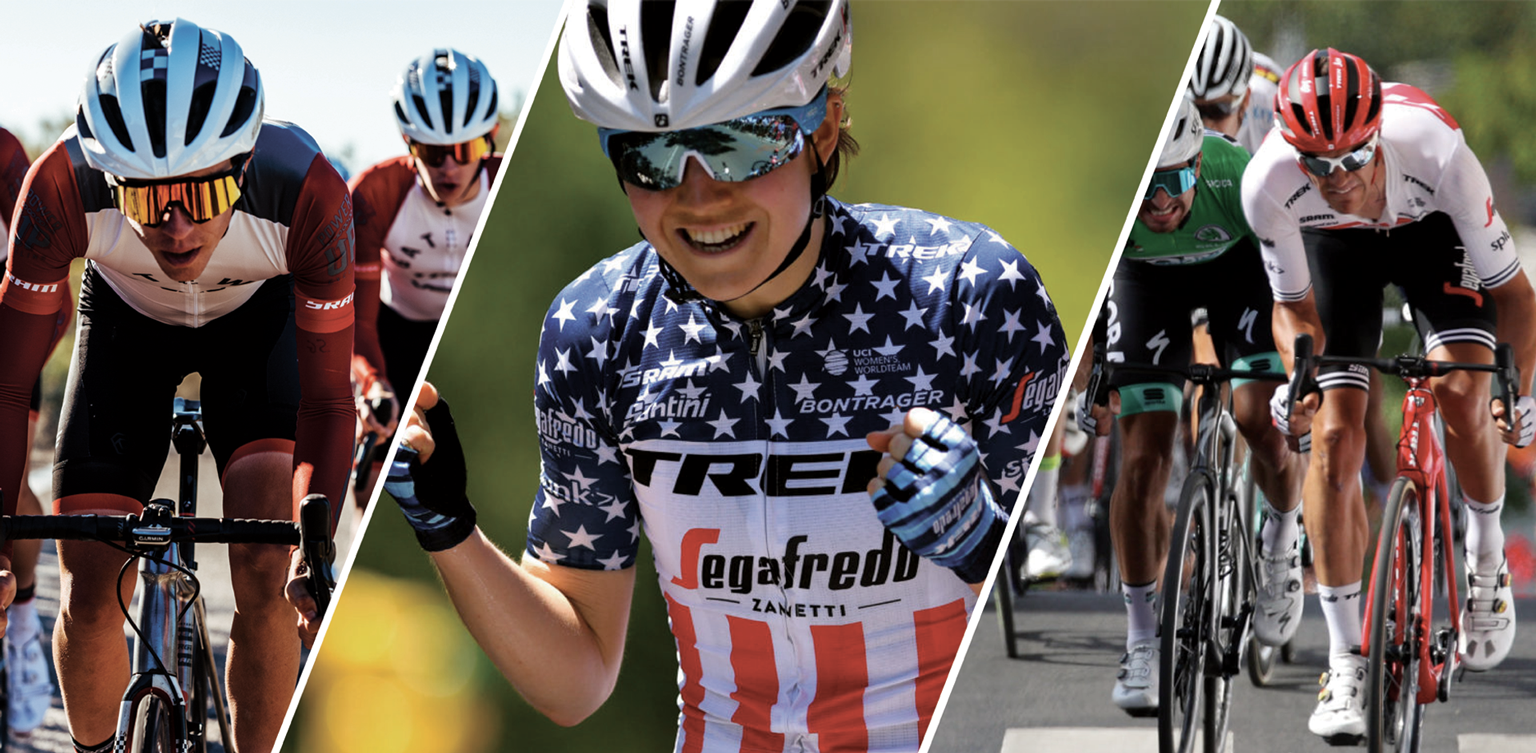
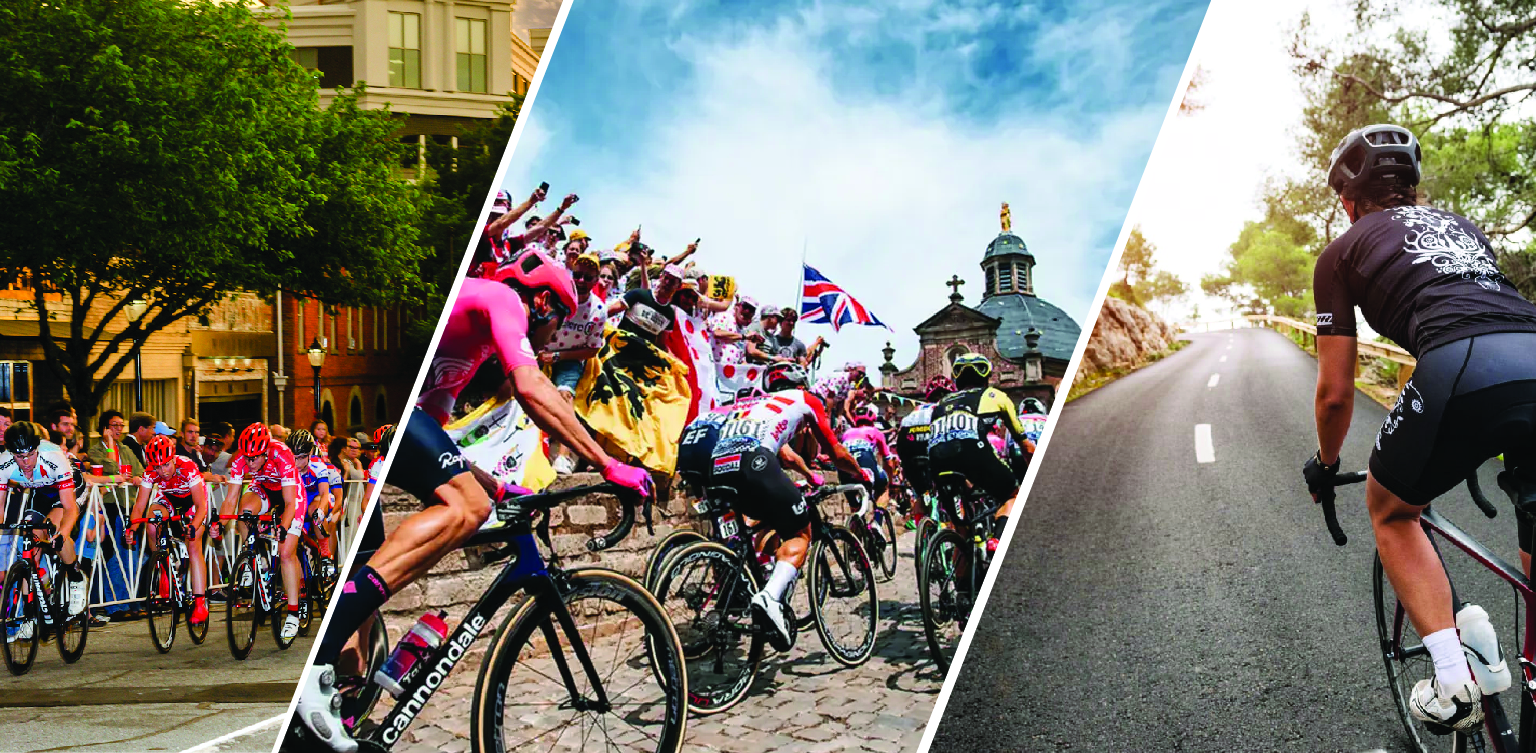
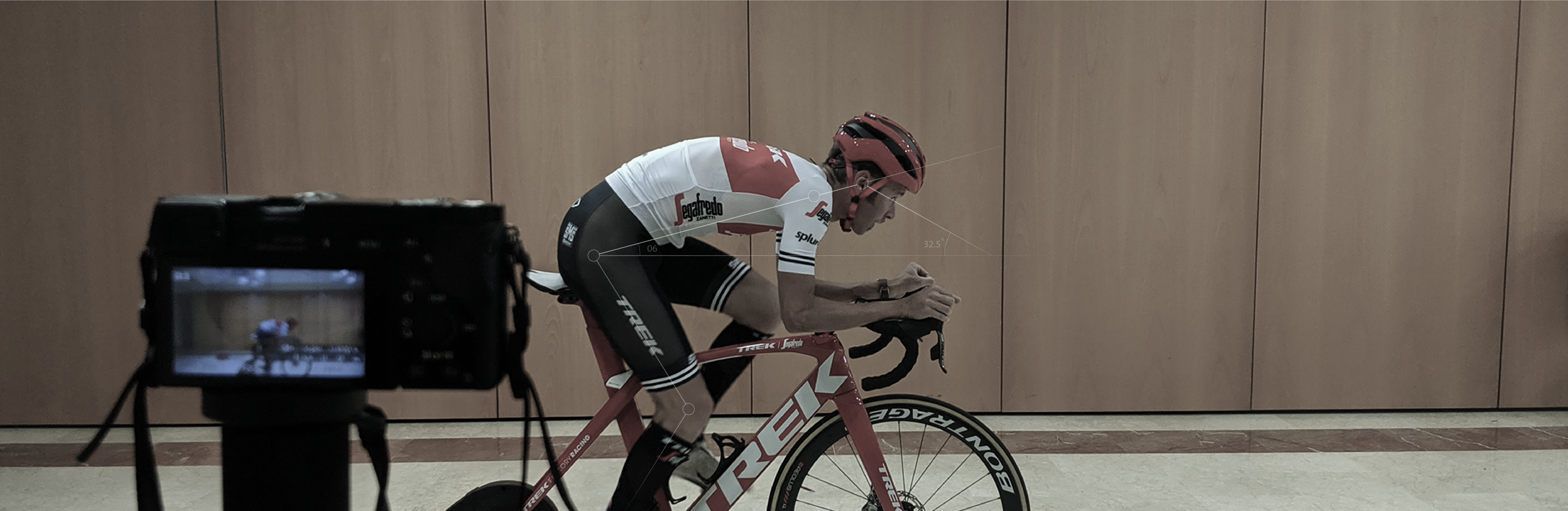
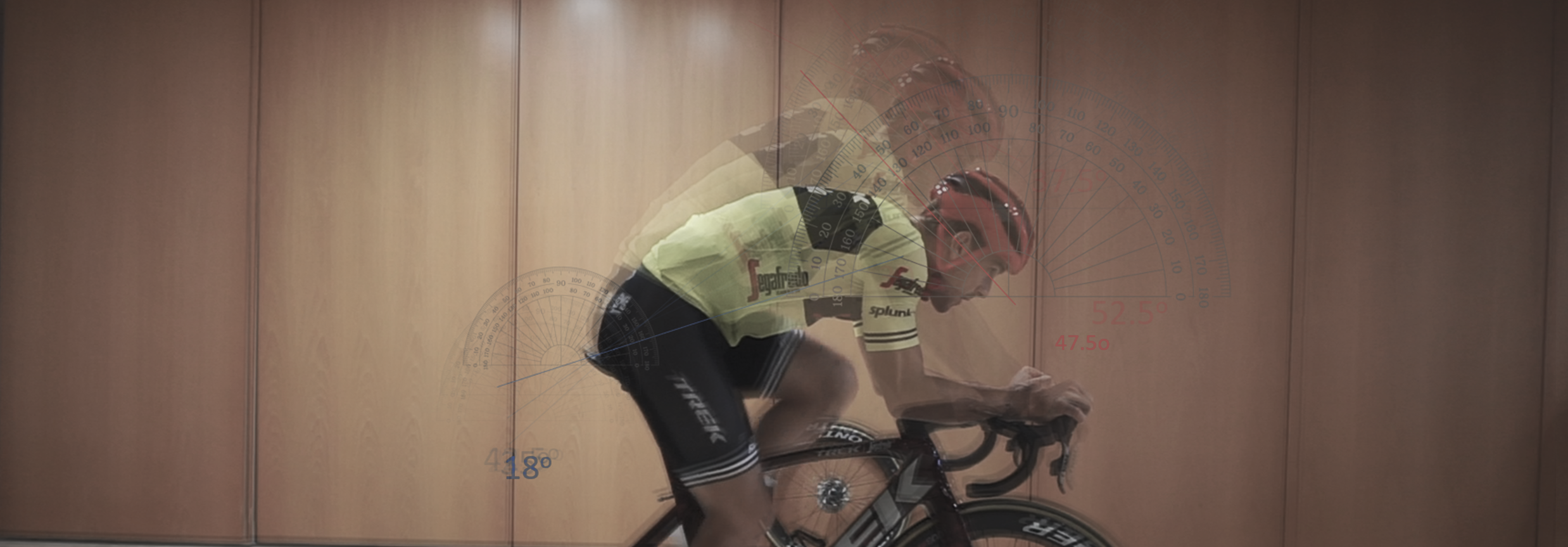
Answer - With the new Velocis, we went back to the drawing board, utilizing over 100 riders; we were able to not only identify opportunities to better fit our riders, but also created a new way to design our product. In short, we turned the process of helmet development on its head. Creating postures specific to road riding, we were able to optimize our designs to suck in precious air in the hoods ( better than any other Bontrager helmet ) and create the fastest helmet ever made from Bontrager in the drops. Focusing on real world conditions and riding efforts.
Tops - 10% - Non aero, upright posture
Hoods - 80% -peloton / group riding posture; the majority of riding is done in this position
Drops - 15% - Semi aero, high level of effort on the front of the peloton
OTF ( off the front ) - 10% - Max level of effort - bridging gaps, pushing pace off the front of the peloton
4
Specific riding postures
2.5
Degrees of variation across all riders + postures
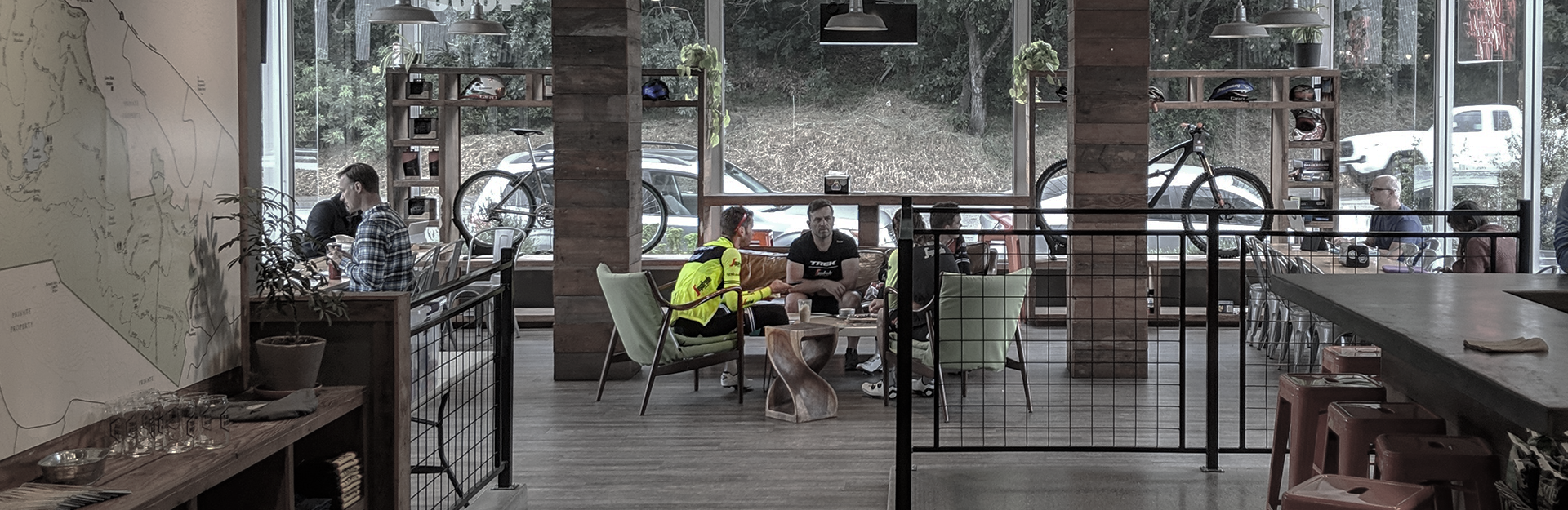
CALIFORNIA RESEARCH - Listening and reacting
Good research requires empathy, and the ability to relate to the rider / dealer on a personal level. Over the course of a year I traveled over 4,000+ miles and to 4 countries around the world on my own and with a team to conduct; rider research, dealer research, ride research an competitor research. This research set the groundwork to redesign the way Bontrager looks at the road helmets we make from a user focused point of view. It not only told us what we were doing correct, but also where the products were lacking.
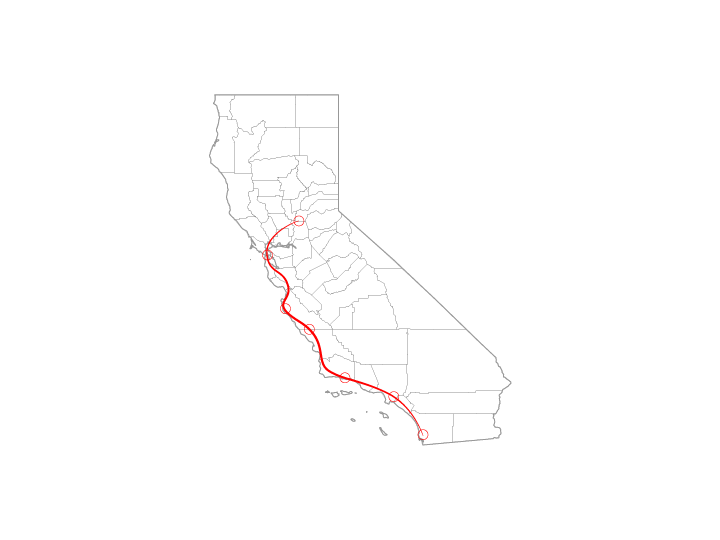
traveling up the coast, I worked with a dealer network to develop a survey that was sent out to all the shops I would visit. After getting the feedback, I scheduled in store visits to further dive into the details. These comments and concerns drove and narrowed development.
22
Shops / Dealers visited
25
Official Surveys collected
RESULTS
The takeaways from the trip showed a unanimous progression towards performance and fit. The dealers and riders that were shown the concept and direction of research was not only well received - but is shown to be a marketable product from the team at HQ. The dealers shared issues with Wavecel product and placed an emphasis on the weight of the helmet. These responses and overall positive progression of the product solidified out groundwork to create a new Velocis with solid data driven backing.
3 - INITIAL CONCEPT DEVELOPMENT
SKETCHING AND CONCEPTING
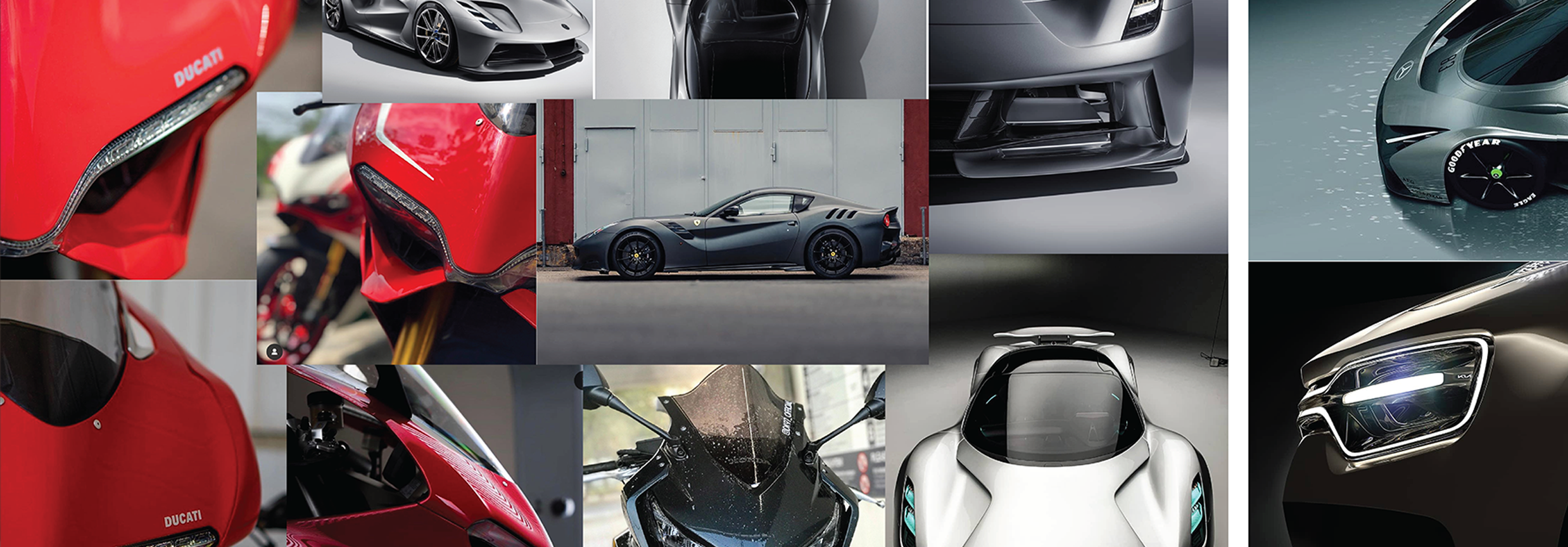
Bontrager helmets has a very distinct style and is gaining traction in the market and industry. Developing an evolution of this form language started from the ground up - data based design overcame traditional styling exercises and developing shape that was proven to be fast and ventilated took the foreground. The inspiration for Velocis, came from aggressive styling from the automotive industry. The shapes that are developed in this industry push the material to its limit and this is something we looked to take advantage of with the Velocis. Taking Bontrager's main design language of 4 main bridges and a forward leaning gesture, we threw the rest out the window and started off on a development process to rejuvenate the brand.
INSPIRATION
Pushing form language and graphic implementation for new product lines takes inspiration from industries that are notorious for pushing development of materials and design. In this case, the form language of high performance motorcycles and cars was the perfect inspiration. These products are visually fast, attractive and sleek. Their simplistic form language allows details to shine, and pushes multiple layers in the design theory with surfacing creating visual hierarchy in the product.
Likewise with graphic implementation - the thought process here was to accent the overall ID of the product. to use CMF that hasn't been used at Trek before to showcase and highlight desired form language and shape. Creating subtle matte / gloss accent changes or pushing large scale color blocking and part breakup - the design was meant to be the 20 foot view winner ( riding distance ), and the graphics was used to create visual interest at a 1 foot view ( on the shelf presence )
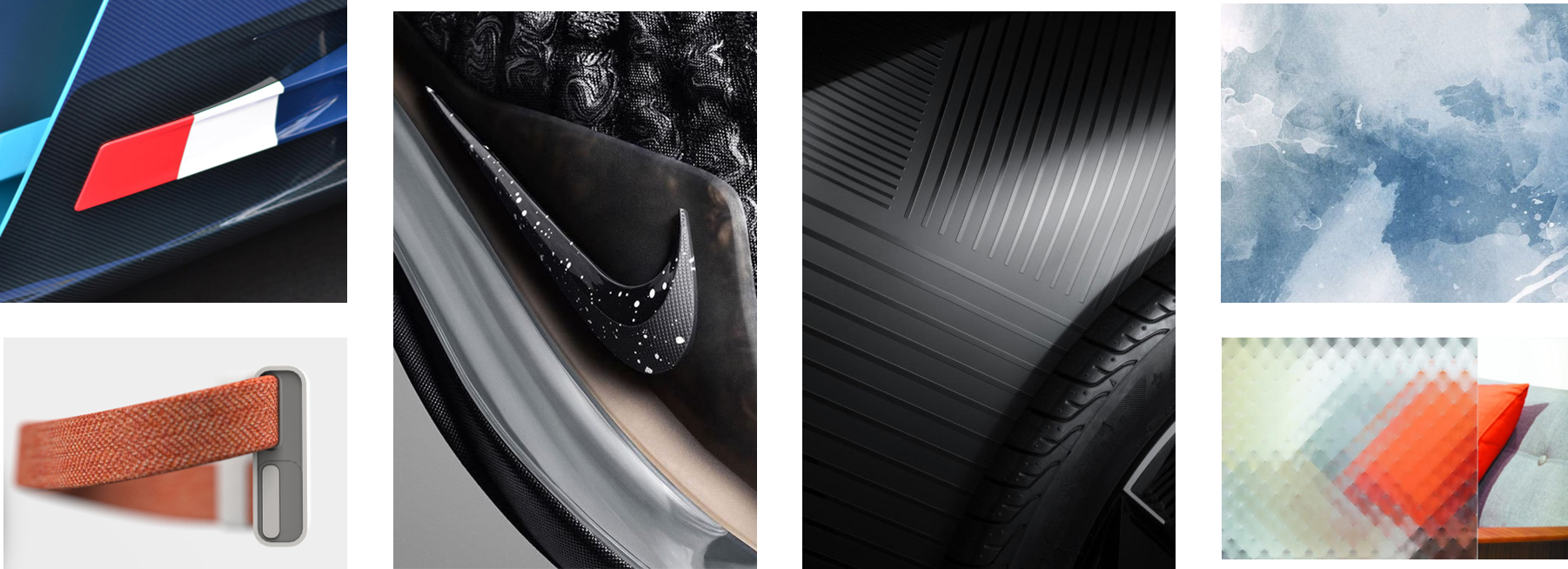
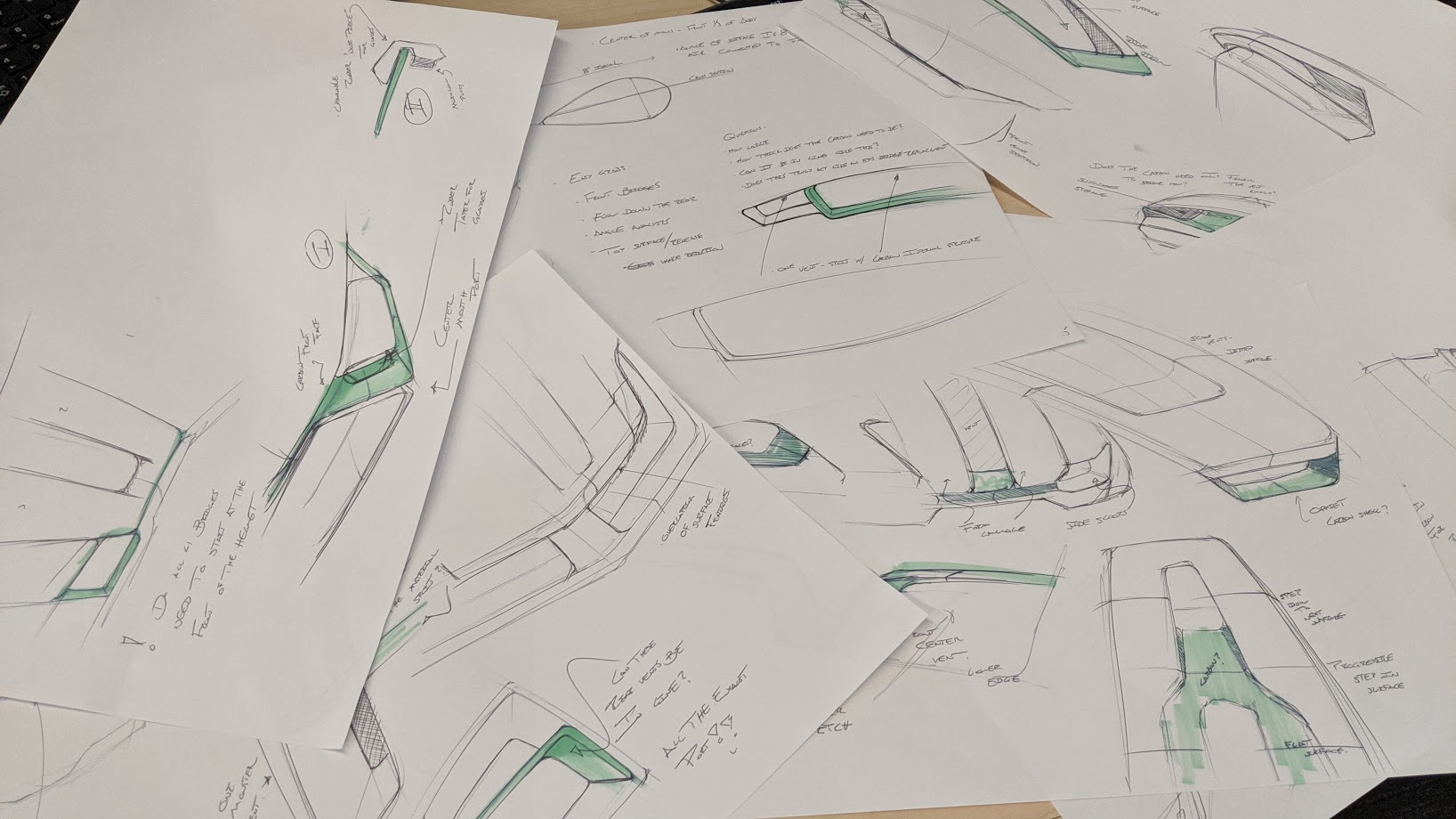
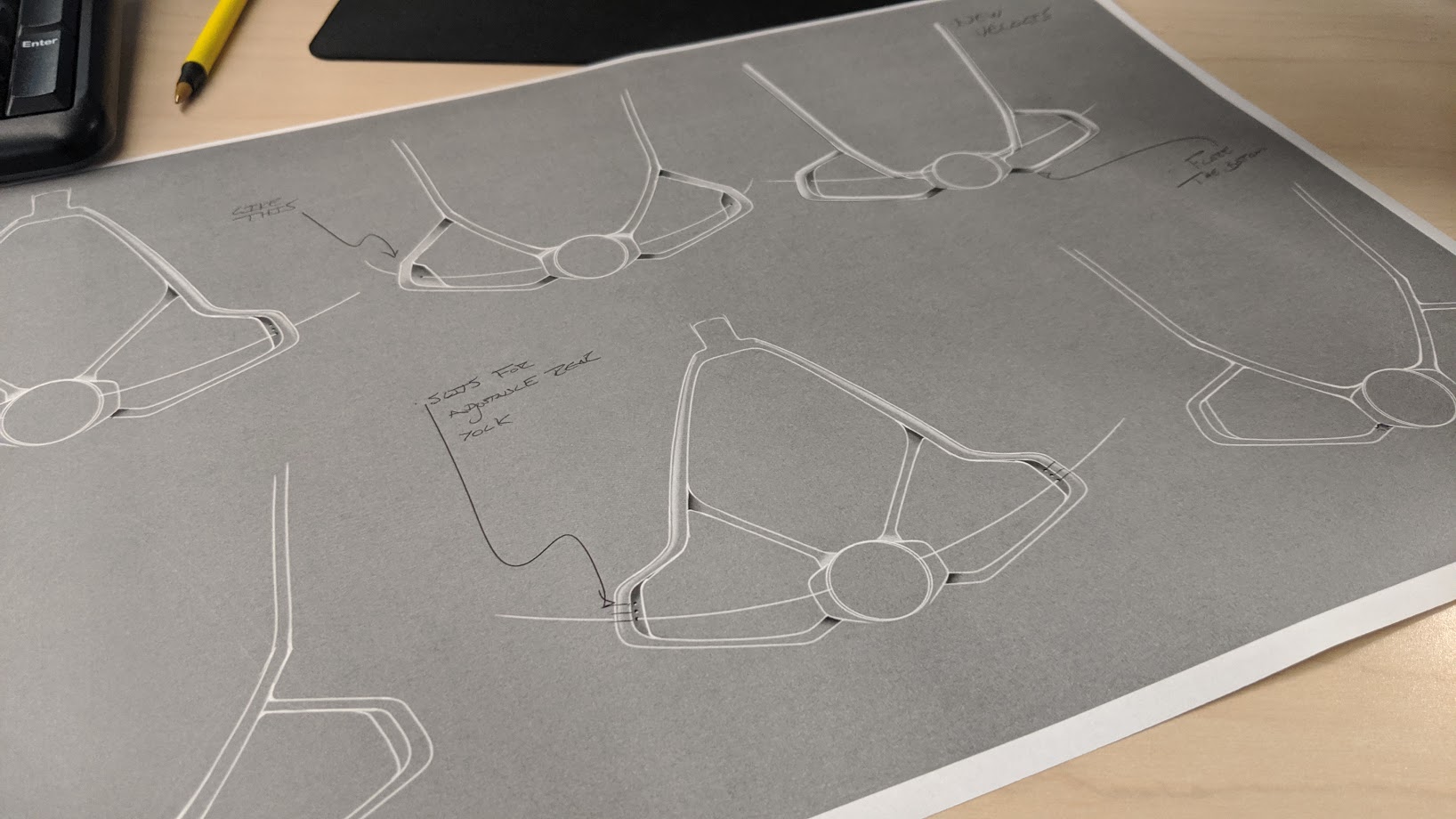
INITIAL IDEAS
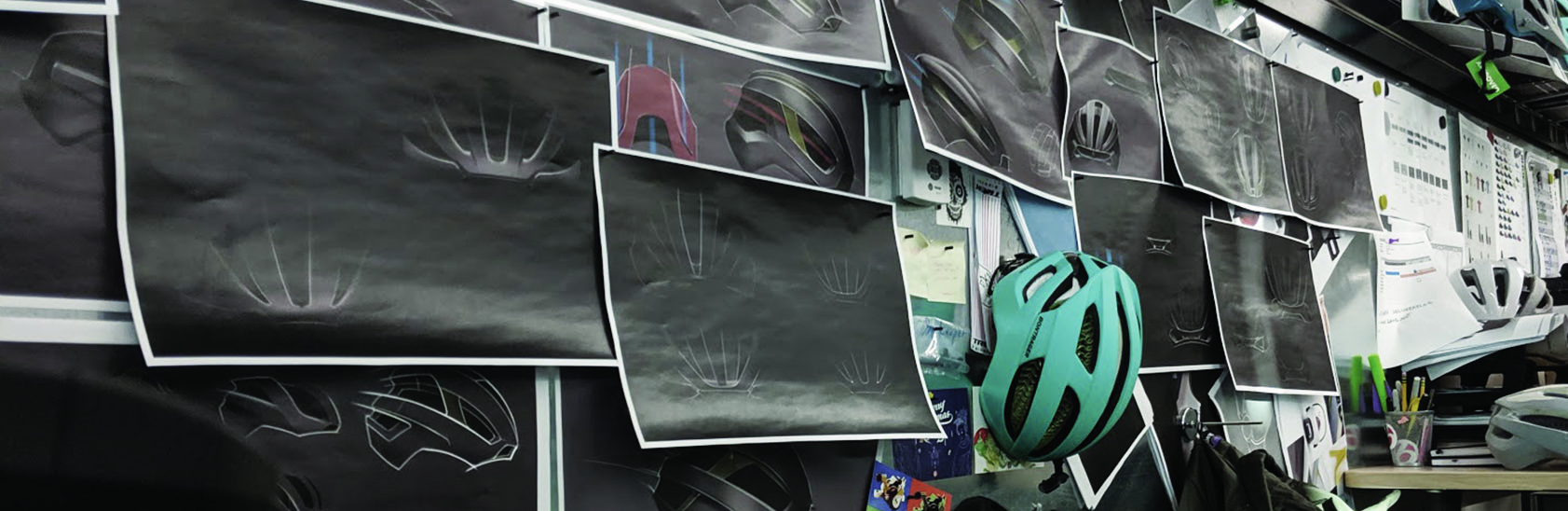
Above Image - these were sketches from a mind dump. Taking a few days and sketching all of the ideas ( good and bad ) just to get them out of my head and on paper for reference wen I started the actual project development. Most of these sketches made their way into the final form of the product.
Below image - These were concept sketches for the Fit system yolk - the CAD development of these parts were handed off to the CAD group and I was able to drive design direction from afar while focusing on the overall design intenet.
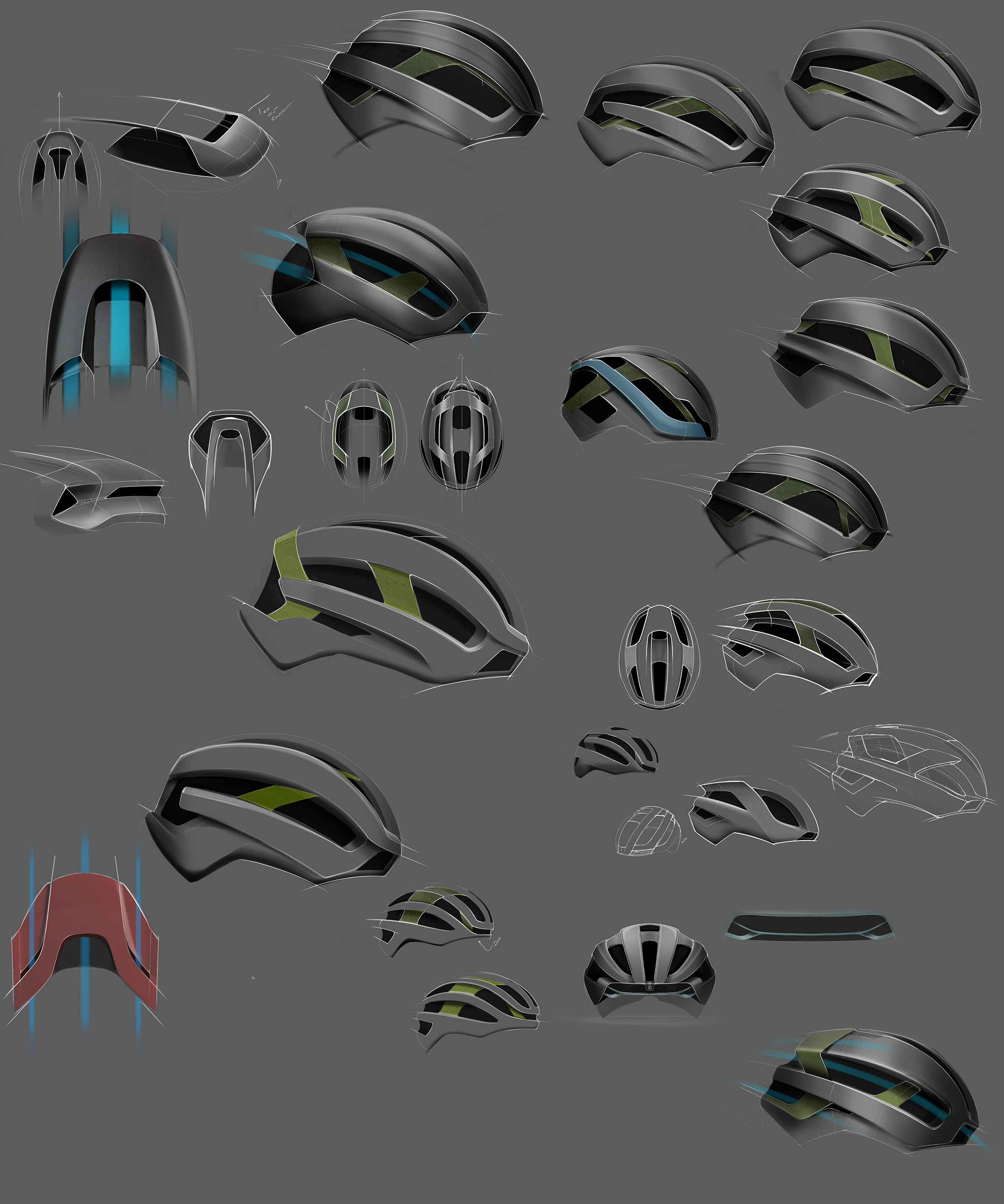
INITIAL CONCEPT
Above Image - This was the first round of concept sketches for the velocis. The quick, exploratory form was meant to push the product too far into something that we haven't done before as a company. The sketches offered a mild to wild approach in their style to push the creative director into 'what could be' this industry leading product.
Below Image - An example of a round 2 sketch shows a refined approach to detailing. Once the overall style was chosen and refined - My attention changed to the subtle surface changes and details that are usually forgotten. The process at this stage jumped in and out of CAD and sketching allowed for quick ideation of concept - while CAD allowed for very fine tune adjustment of chosen concepts.
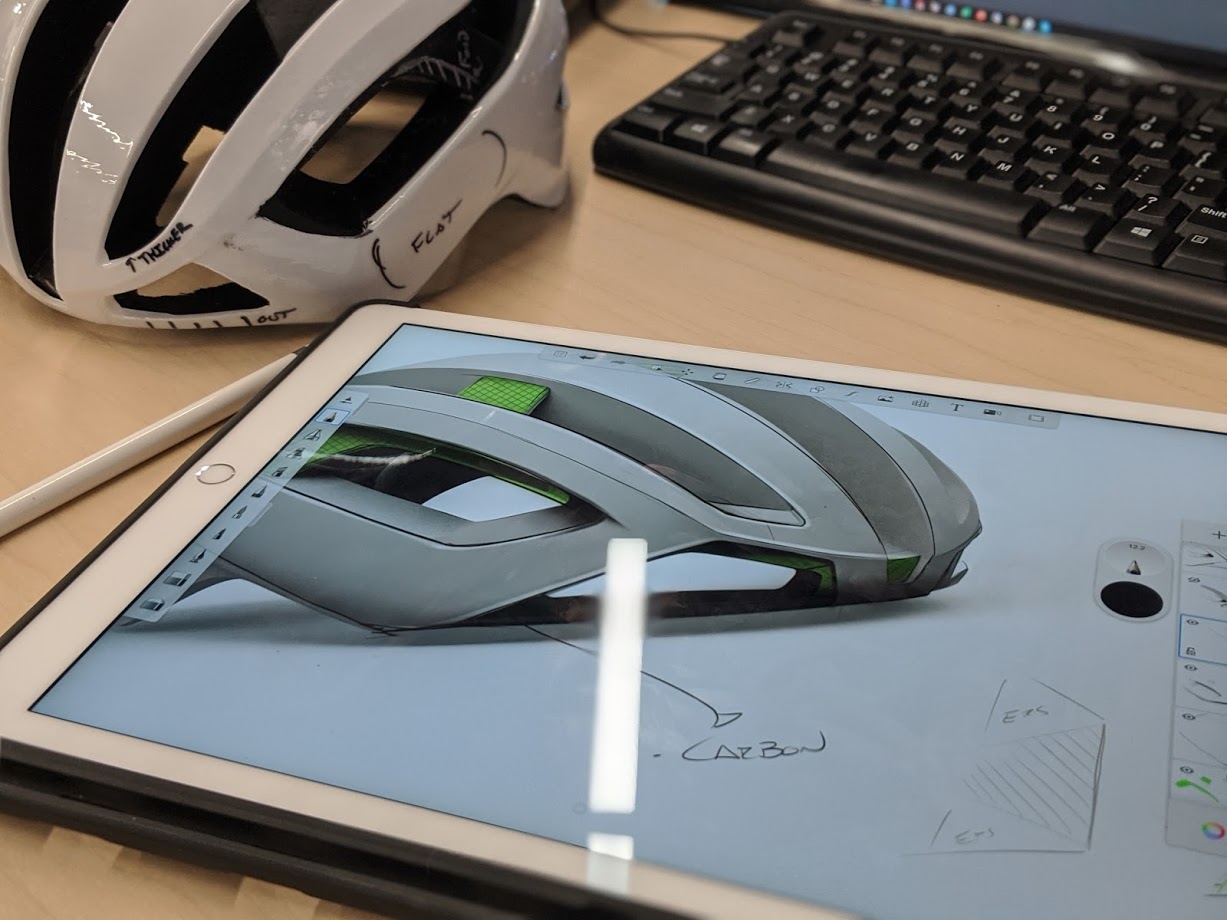
INITIAL CONCEPT
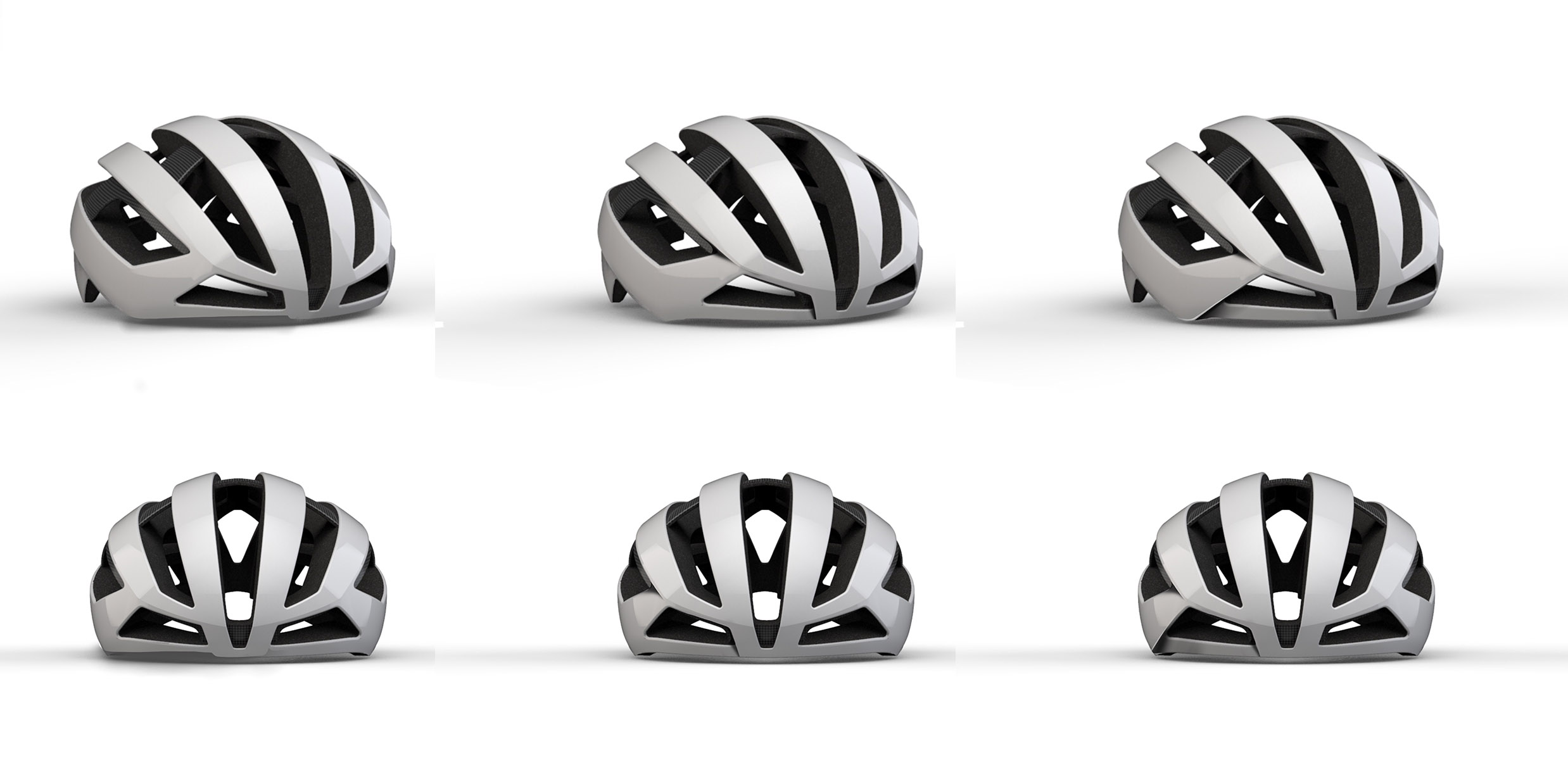
Above Image - Further refinement and ideation of concept - These are digital sketches that are done in photo-shop ( left side is updated concept, right is current ) This was used to show how slight surface changes and alter the front breakup of the helmet
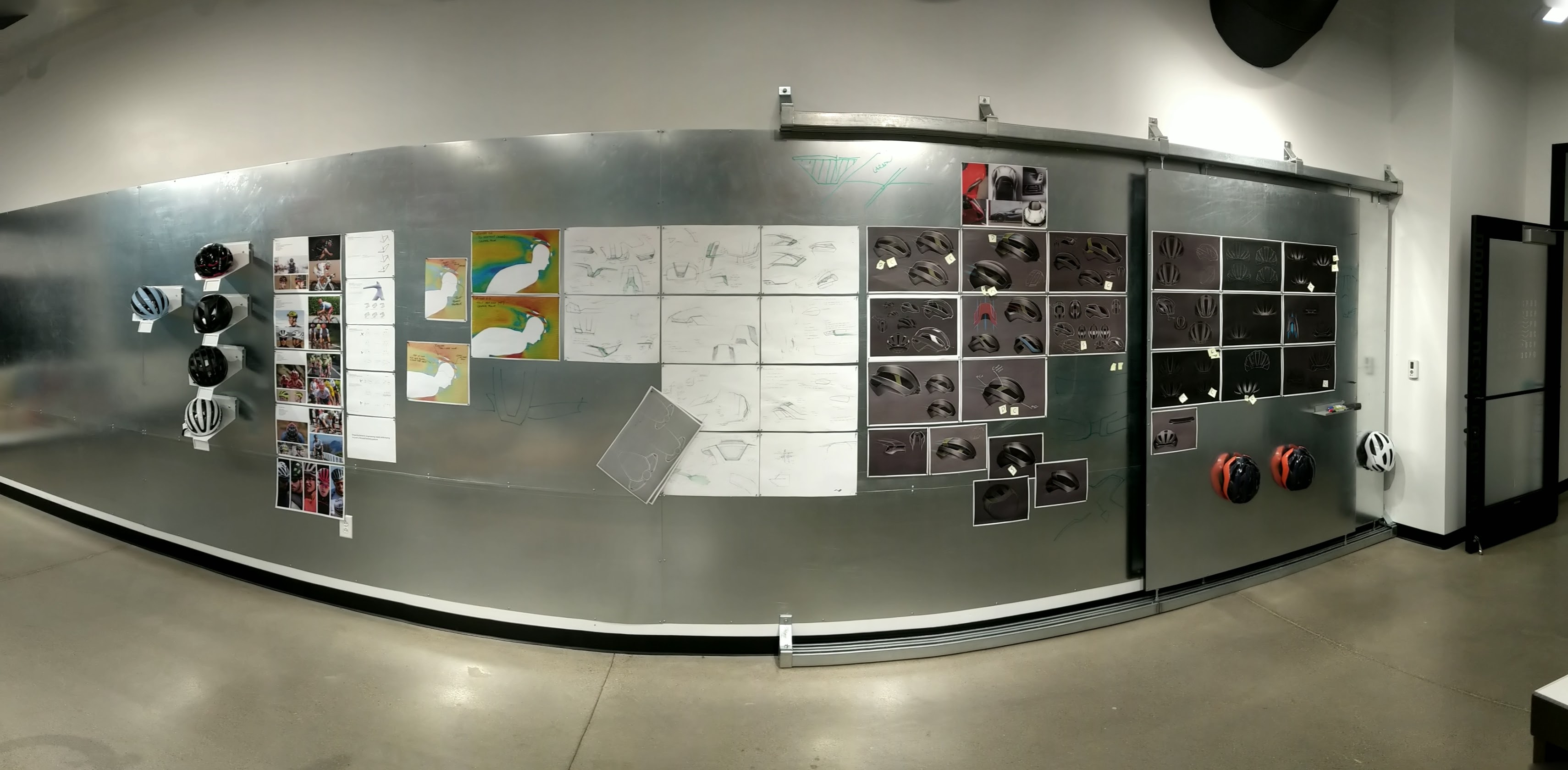
Below Image - Round 1 concept review - showing the design flow from initial BIC competitors, to Trek design forma language, rider profiles, initial sketches and preliminary aerodynamic data
4 - CAD DEVELOPMENT
3D DEVELOPEMNT
The cad development for this product started from a hand full of sketches and a rough base model initial material clearances and testing standards. The EPS was developed in Rhino 3D which was a process I brought to Trek and is now being pushed out to the bike design groups. I also rendered these in key-shot for display purposes and marketing material which is being used at Trek World this year. In past projects we have handed off model making or cad changes but since the aerodynamic and ventilation aspect of the project was so large - our design time only allowed for 2 days of changes to rebuild models for testing. This proved to be quite challenging but the new process allowed for rapid change of surfaces and details that saved us about 6 months of modeling / testing time.
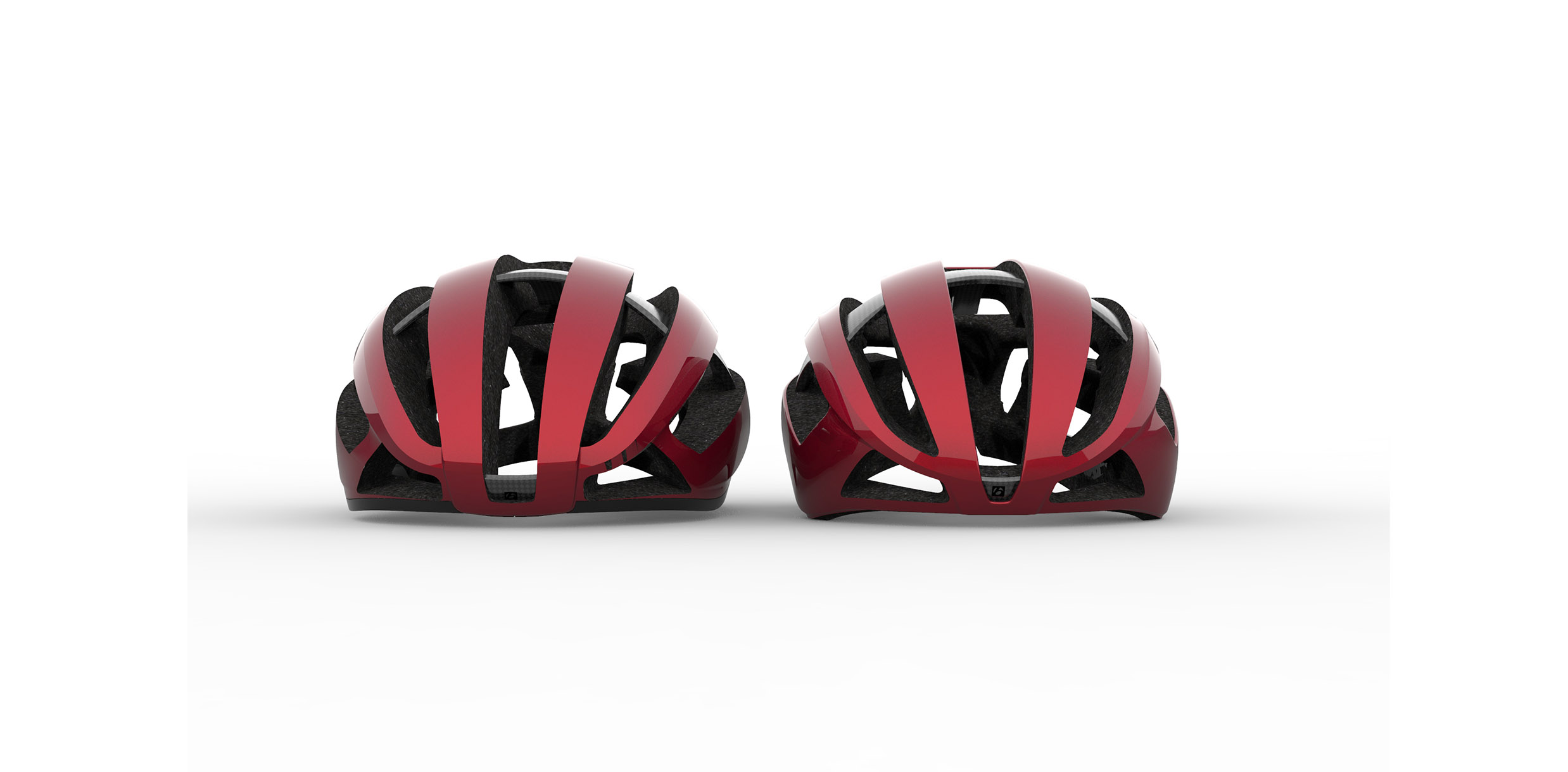
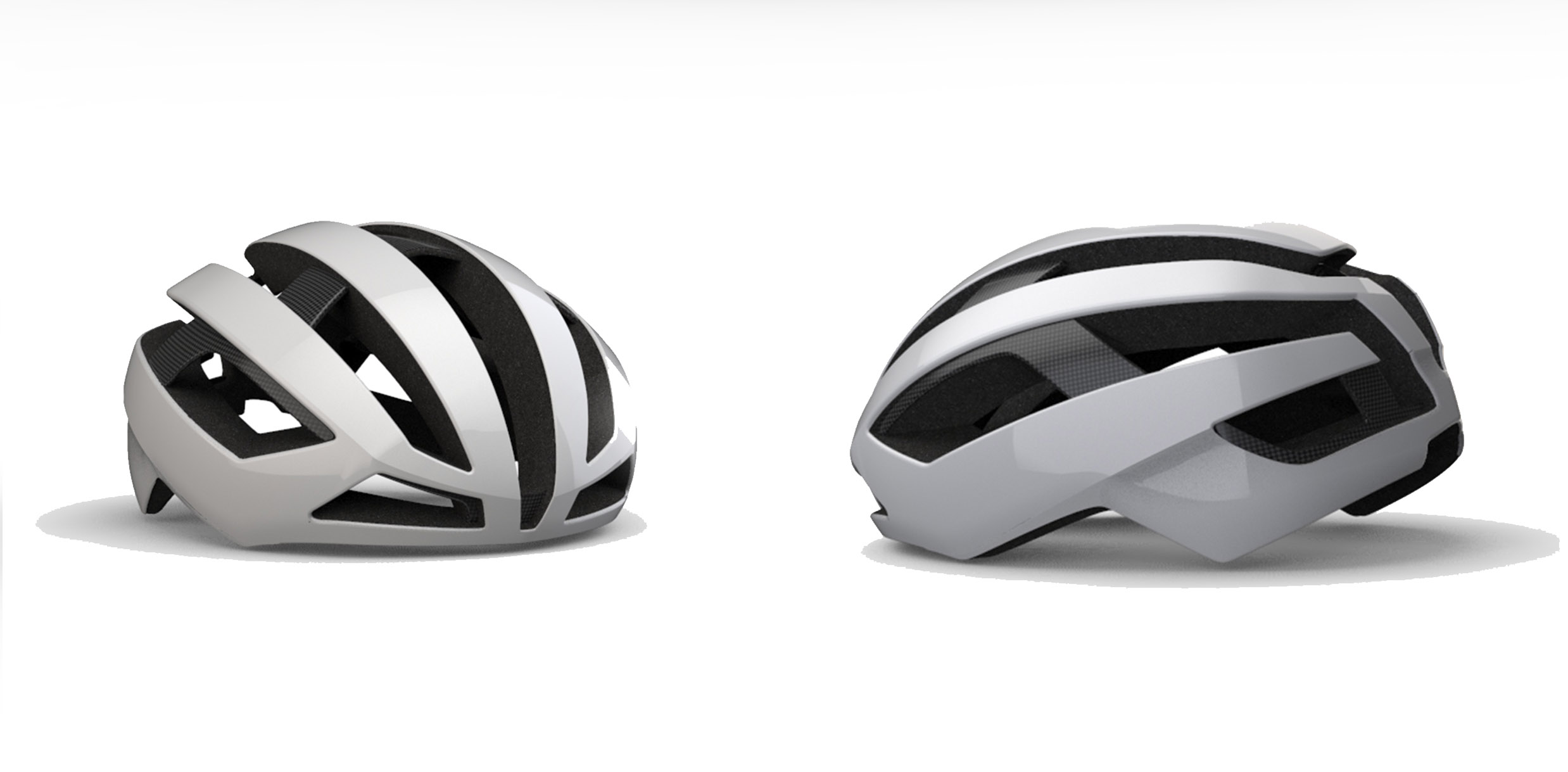
INITIAL CONCEPT
Above Image - Initial CAD models were created to start looking at surfaces, as you can see there were major changes done to the front of the helmet as the design process continued
Below Image - round 2 concepts showed a massive simplification of form and shape - focusing on CFD and aerodynamic results. This helmet was then printed and small areas were reworked by hand to quickly change the 3d form - it was then changed in the computer and finalized for production.
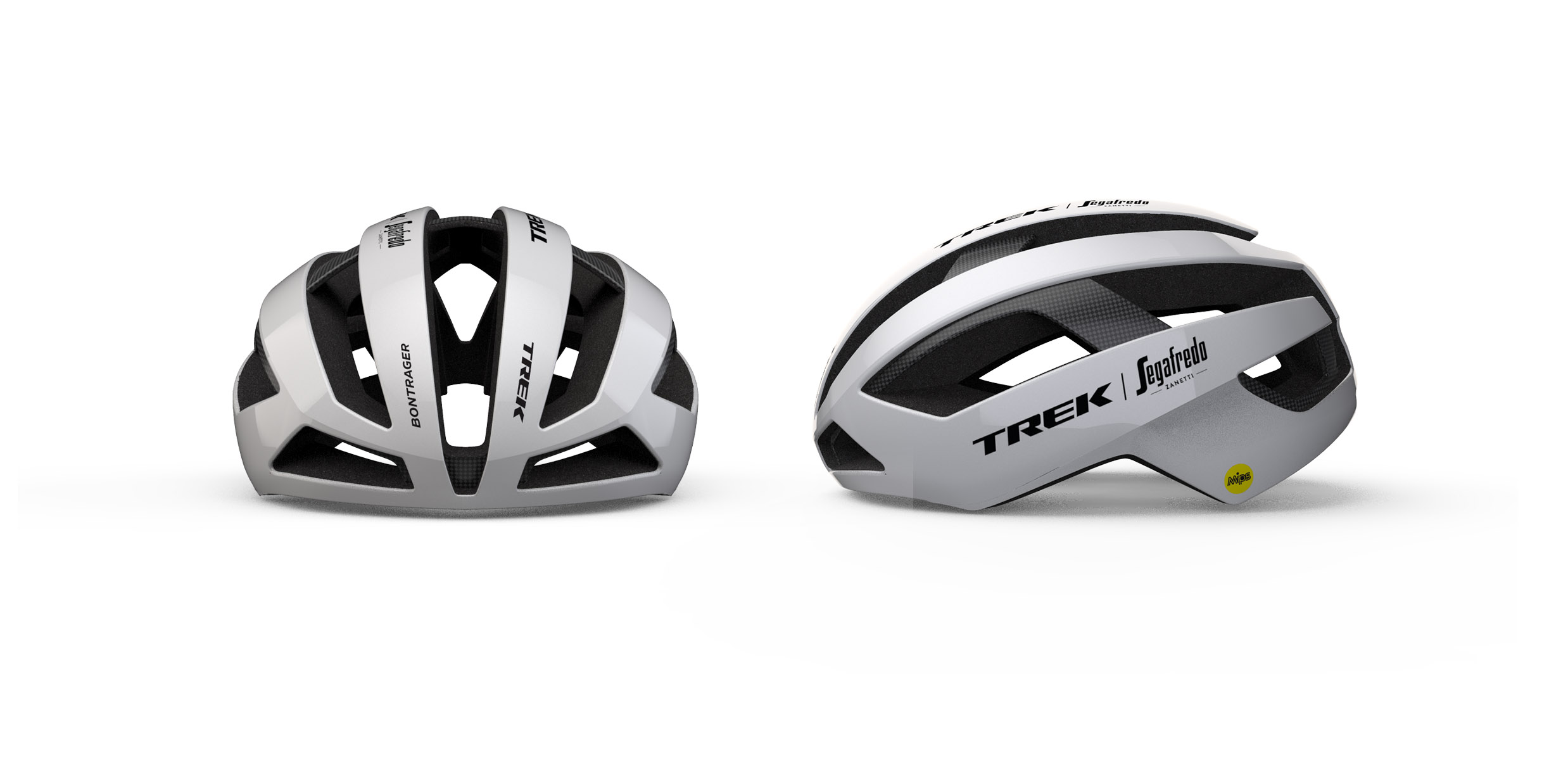
FINALIZING CAD
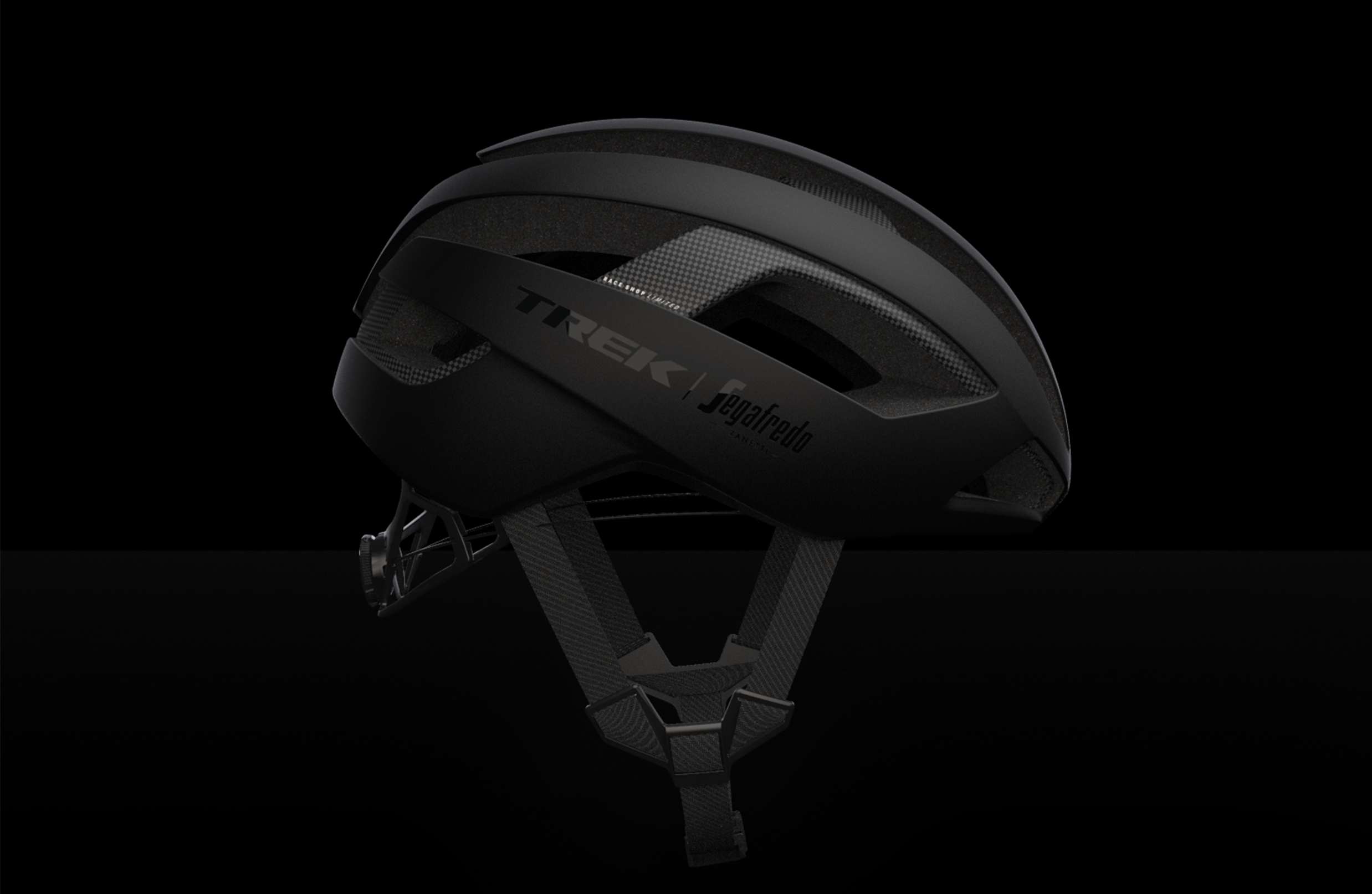
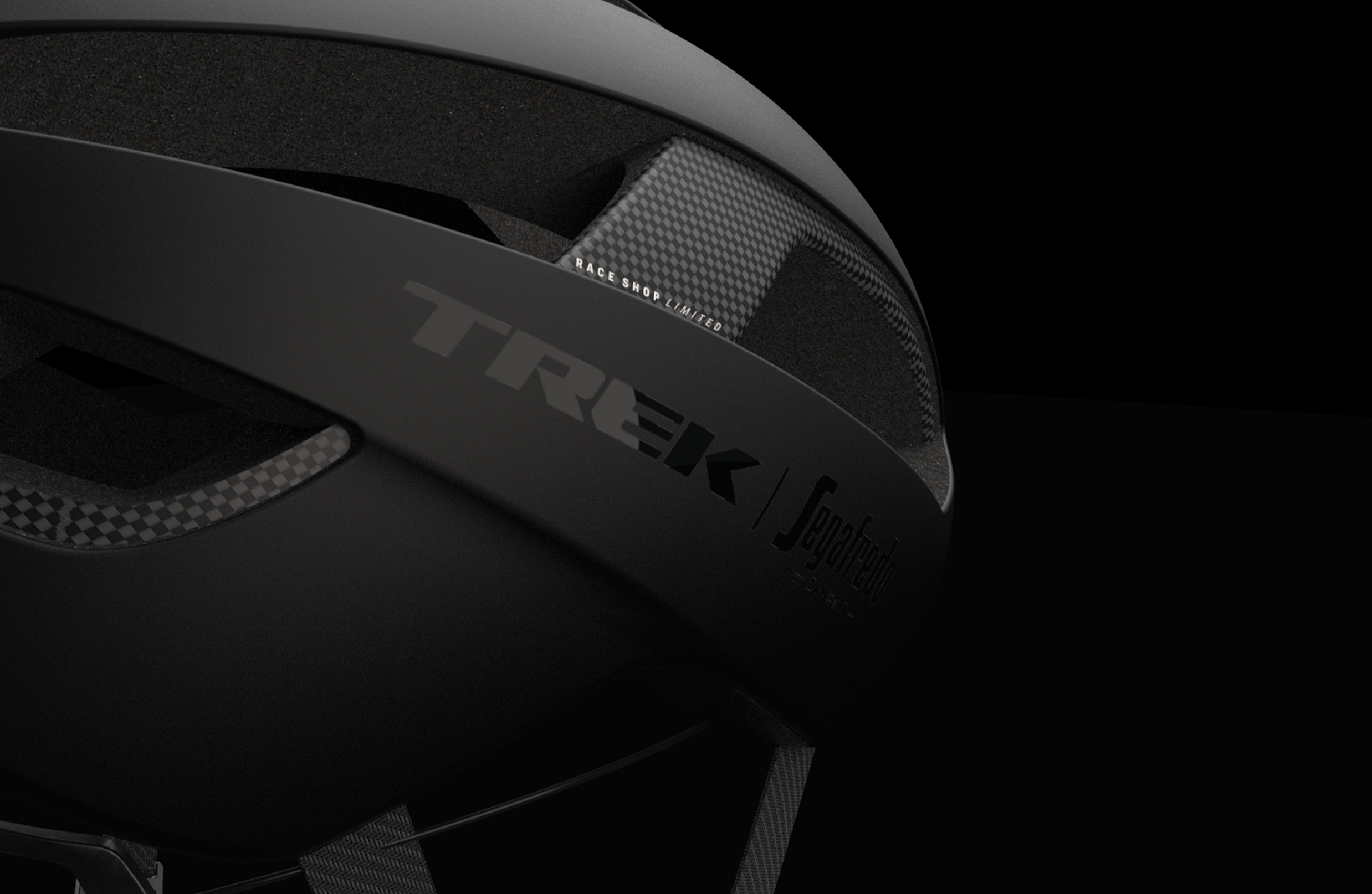
Above Image - A Trek segafredo concept was developed to show marketing and graphics what a tour style scheme could look like.
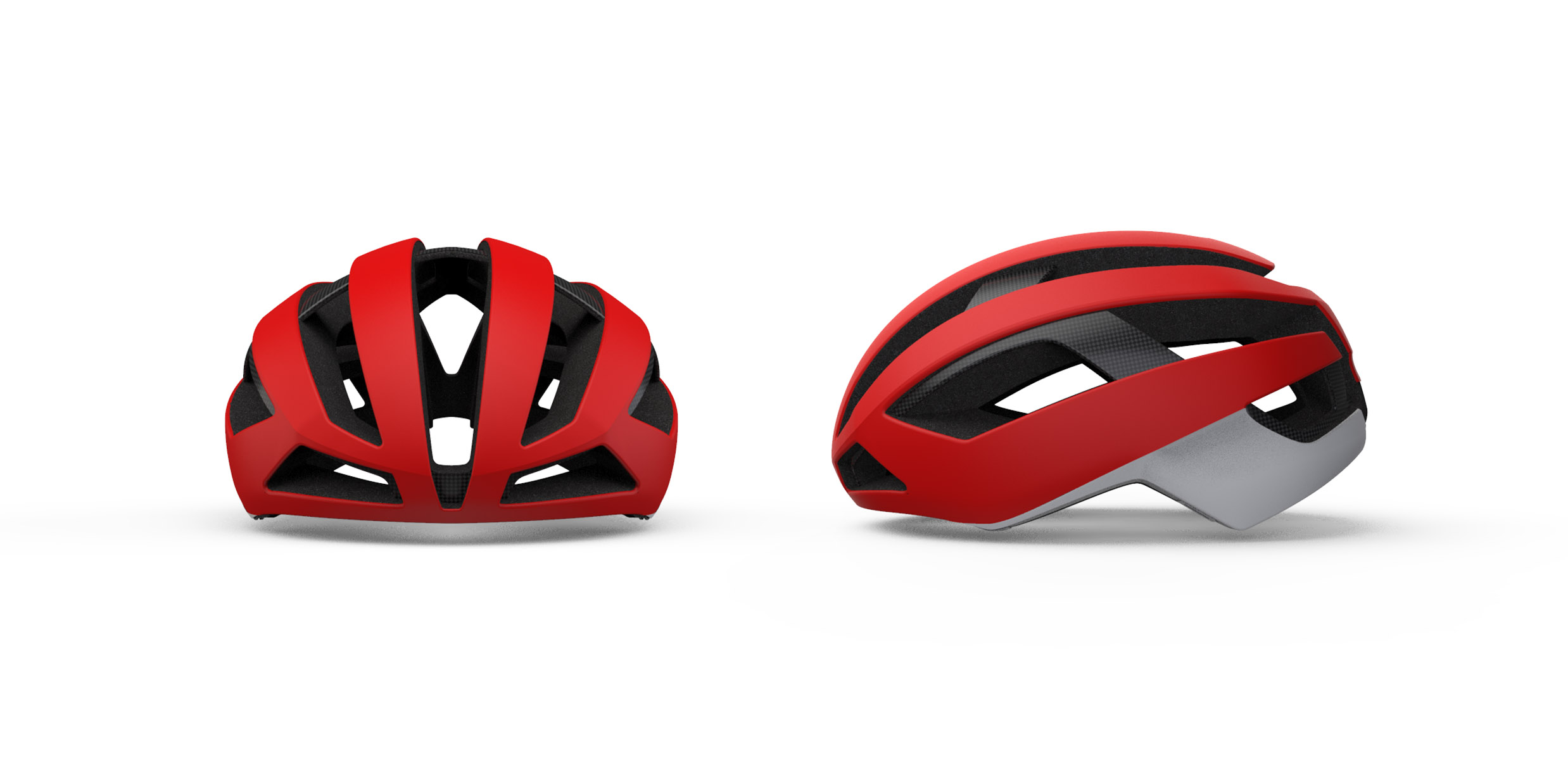
Below Image - Looking at shell trims as a tool to give to the vendor to properly cut shell and build tooling. These files are also handed to graphics to further develop shell patterns etc.
MODEL MAKING
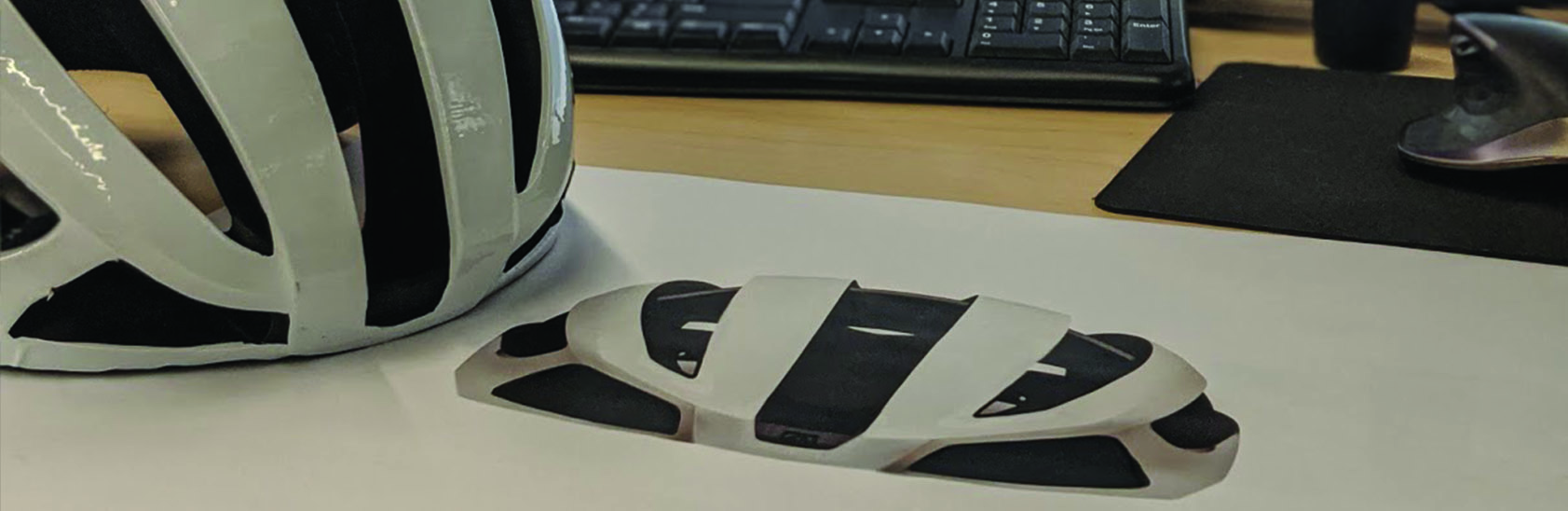
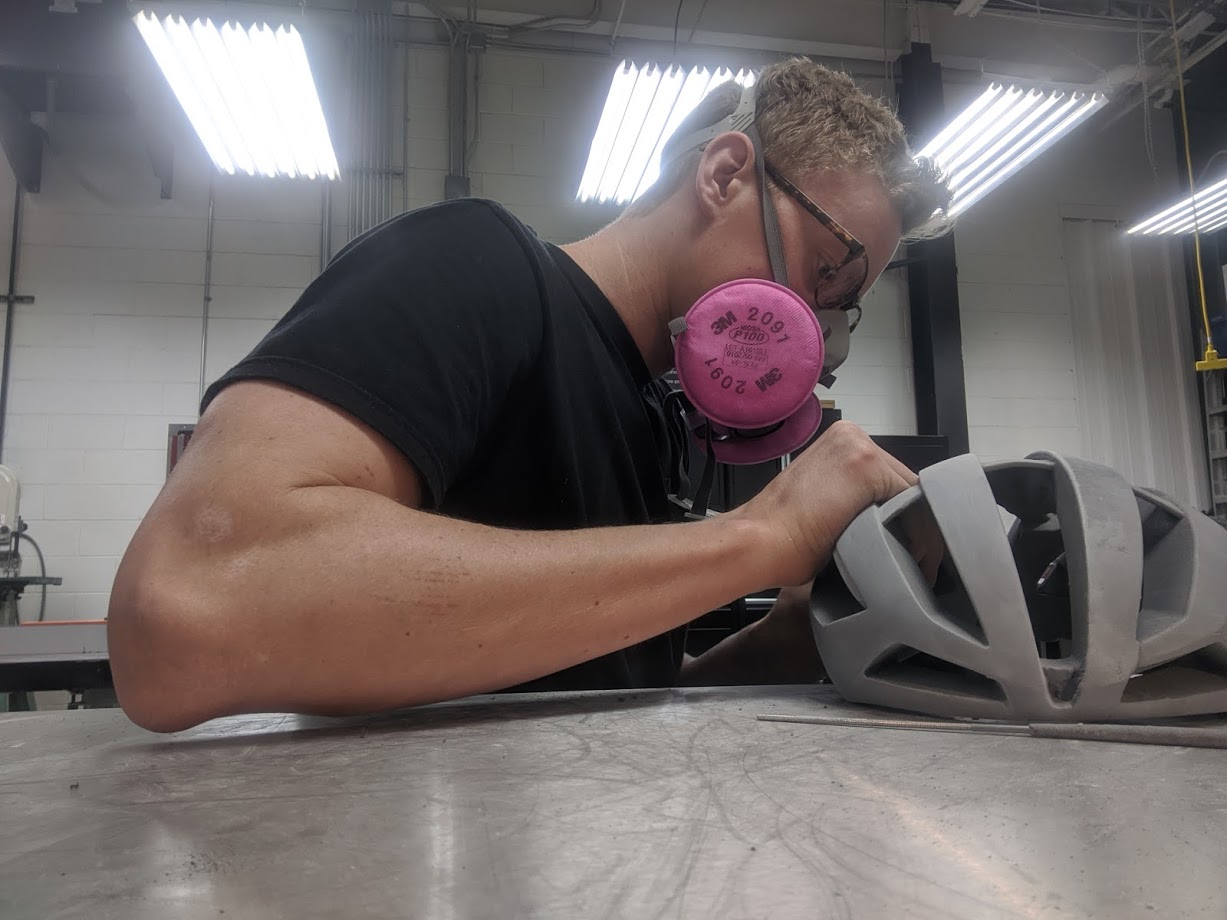
Above Image - Before the process change, all of our helmet development was done in CAD. That being said, the process was changed but sometimes its easier to go back to working a helmet by hand if I needed to work through a tricky surface or transition.
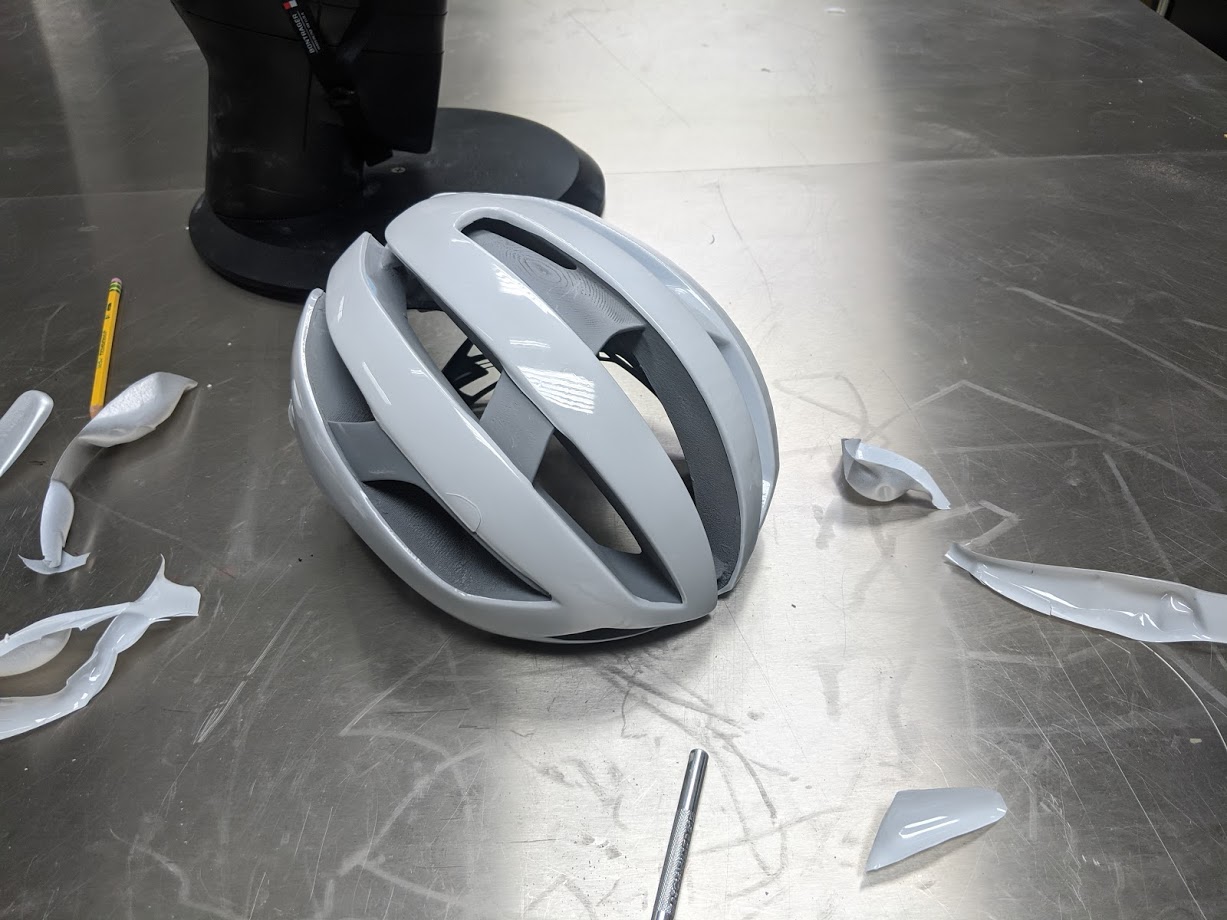
Below Image - I pulled shells and we presented these models at design reviews to review them in full scale at full resolution on a human form. This is an image of a in process model.
CONCEPT DEVELOPMENT
AERO AND VENTILATION
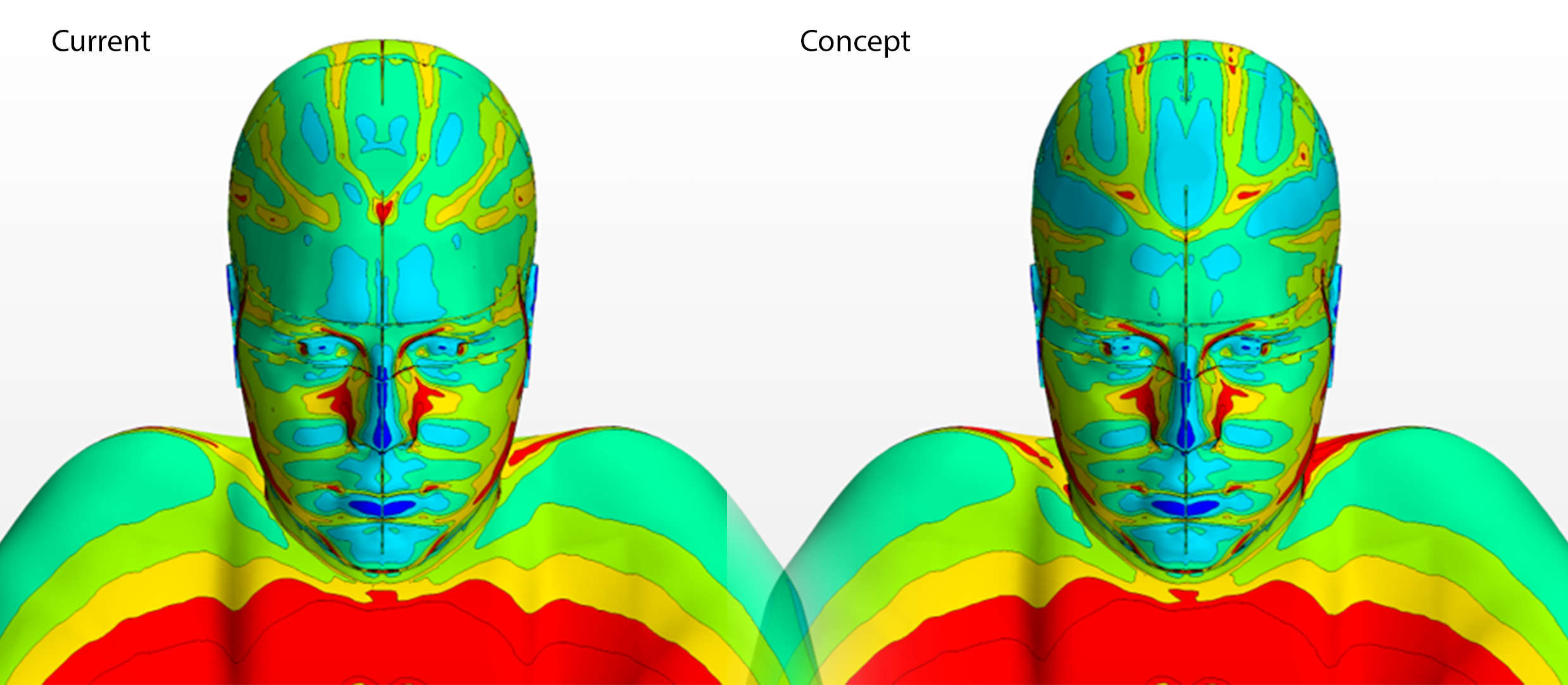
The massive task of developing a helmet that was not only 40 grams lighter than its predecessor, but also create a helmet that is 30% faster was not an easy task. i worked on developing the helmet shape to create a clean separation of airflow and control the amount of airflow going into the helmet. The design improved the speed of the helmet by over 45% and for our records, is one of the fastest road helmets in the market today.
CFD START AND FINISH
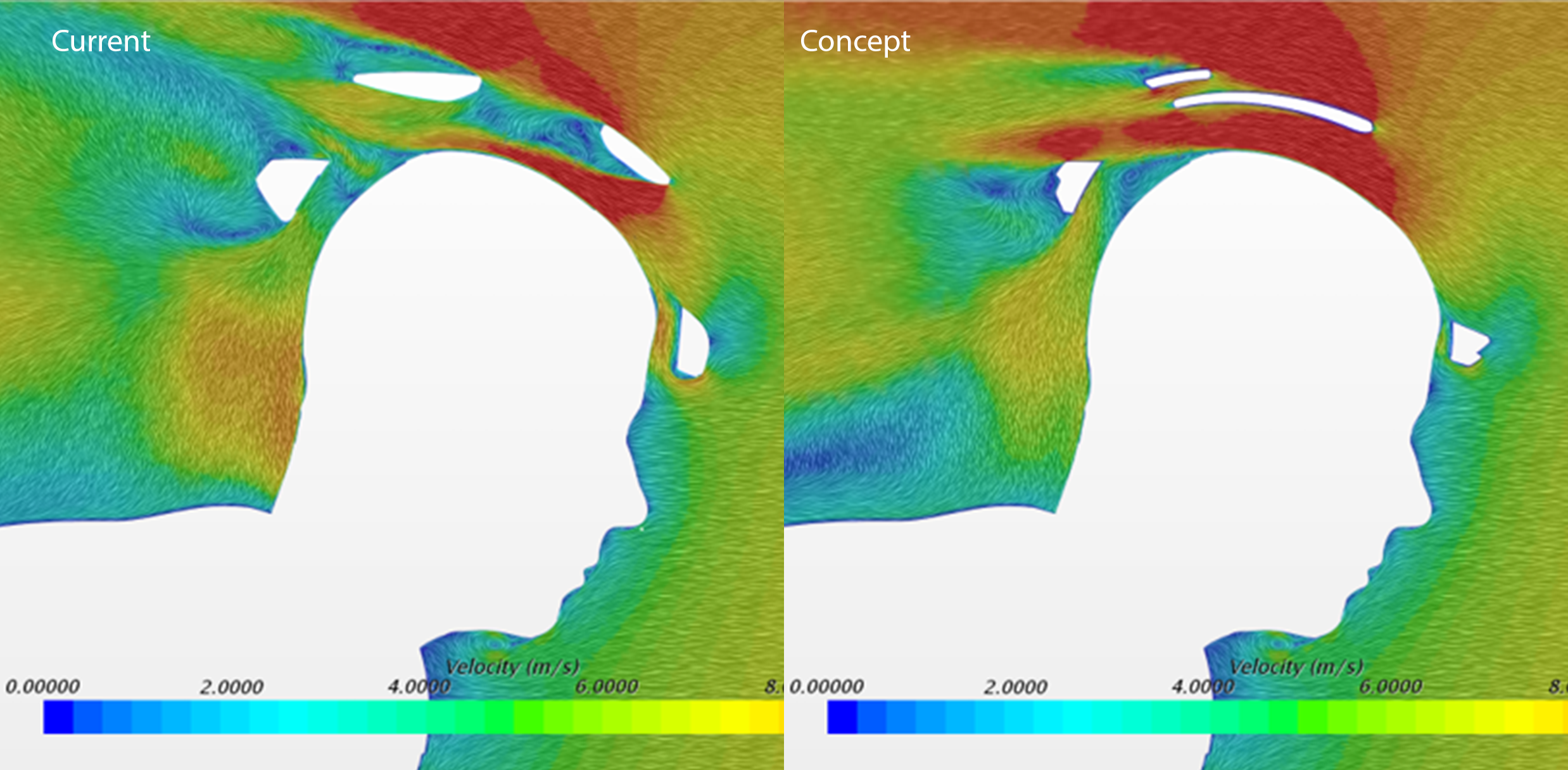
Top image - showing a cross section of the current velocis and the new concept that was developed. The data shows that there is a 35% reduction in drag at a 0 degree yaw setting. This change equates to about a 2 minute time savings over the course of 8 hours.
Bottom image - A comparison of the current and new design of the velocis showing head temperatures. The helmet on the right shows a significant cooling effect ( blue sections ) across the entire front of the head in a comparison to the current production design.
CONCEPT DEVELOPMENT
PLASTICS AND HUMAN INTERACTION
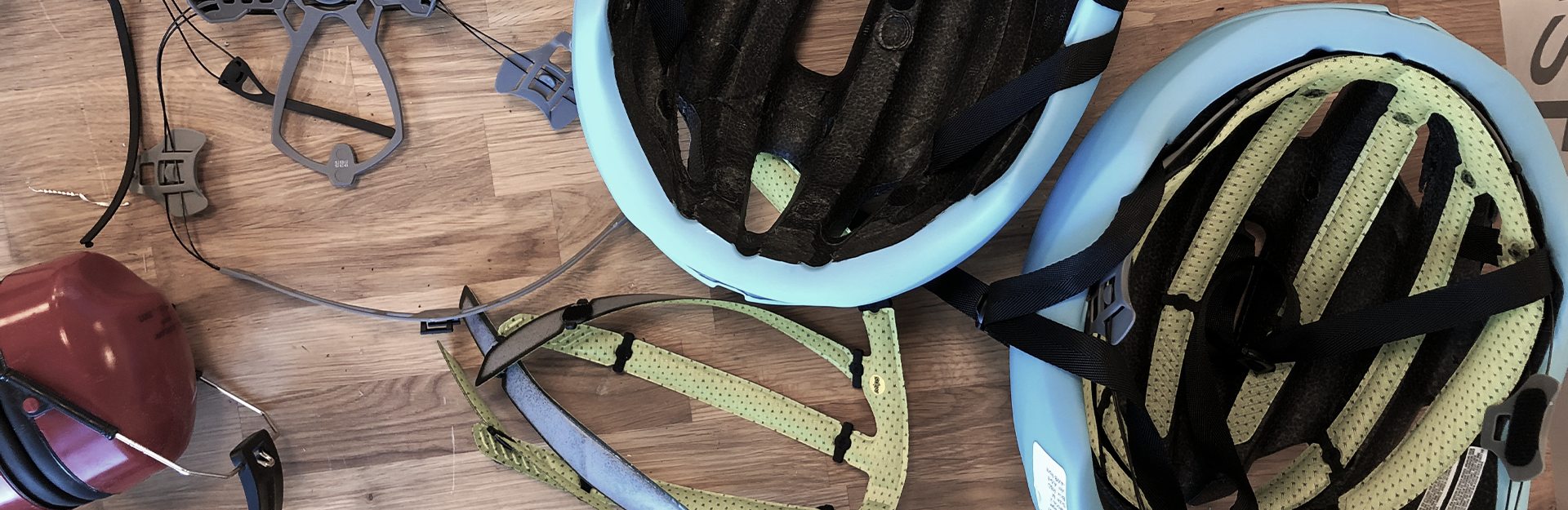
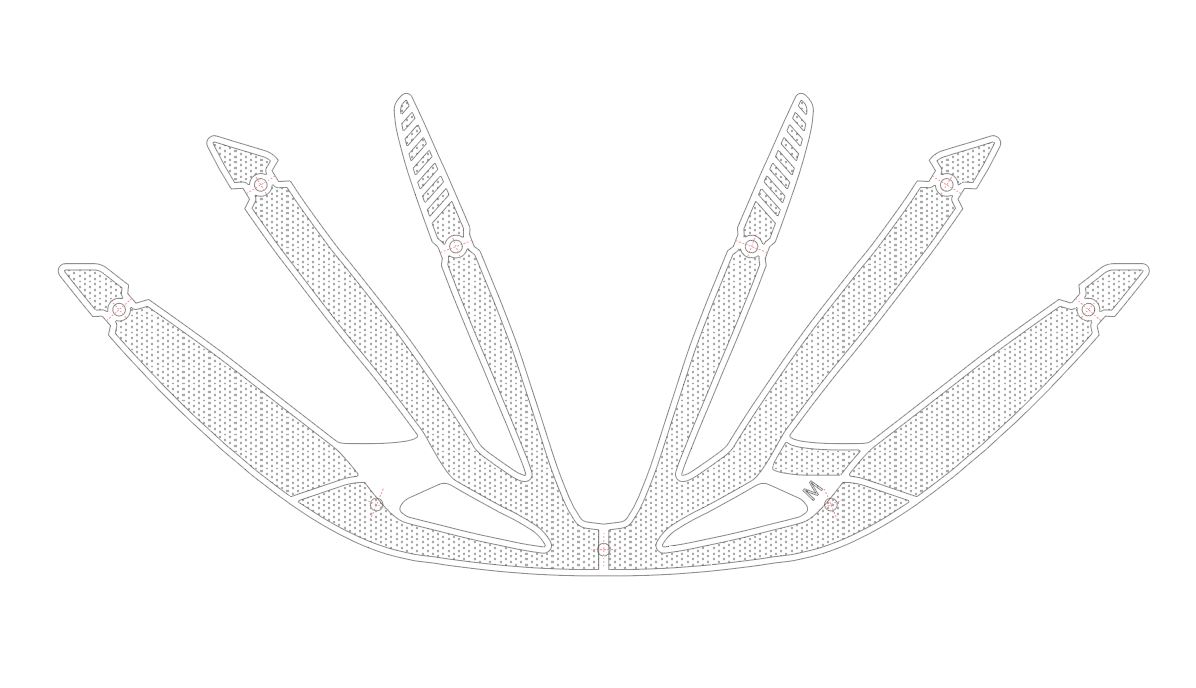
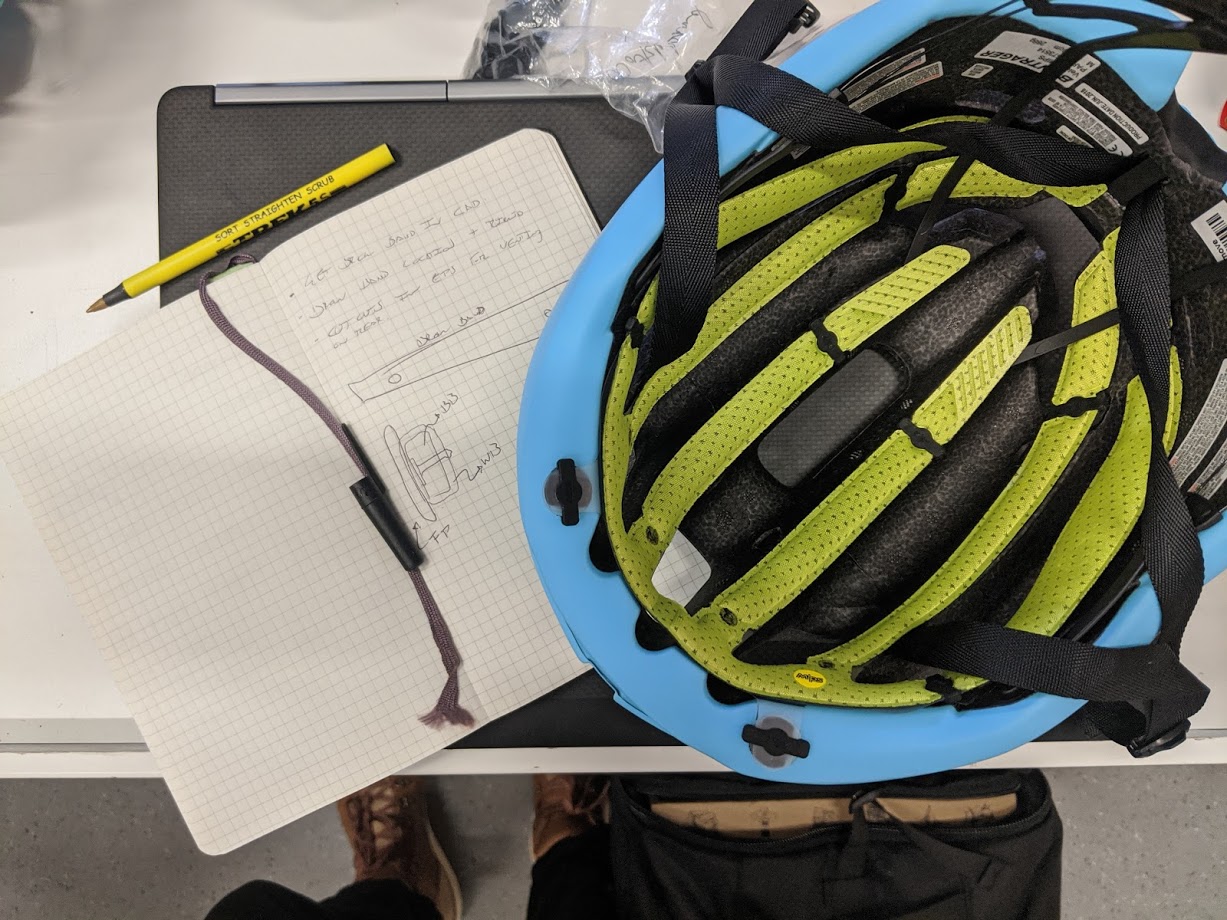
With close partnerships with MIPS and BOA, we traveled to their offices in an attempt o spark the collaborative process and develop a product that pushed what was currently on the market. We worked with both companies t develop brand new fit systems and rotational energy systems to create a lightweight helmet. These parts have not yet launched and I am unable to show detailed images at this time.
4 - CAD DEVELOPMENT
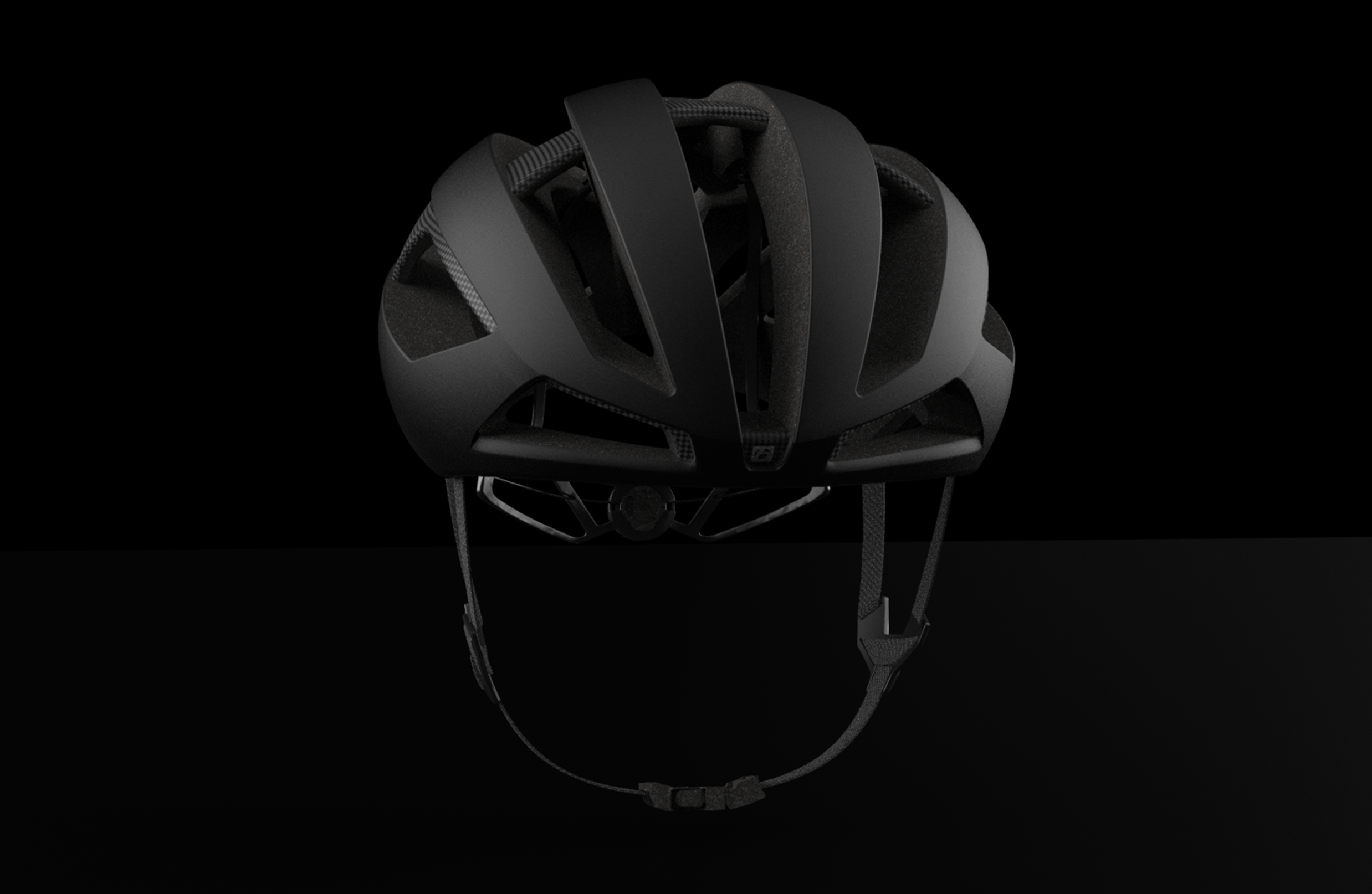
FINAL FORM
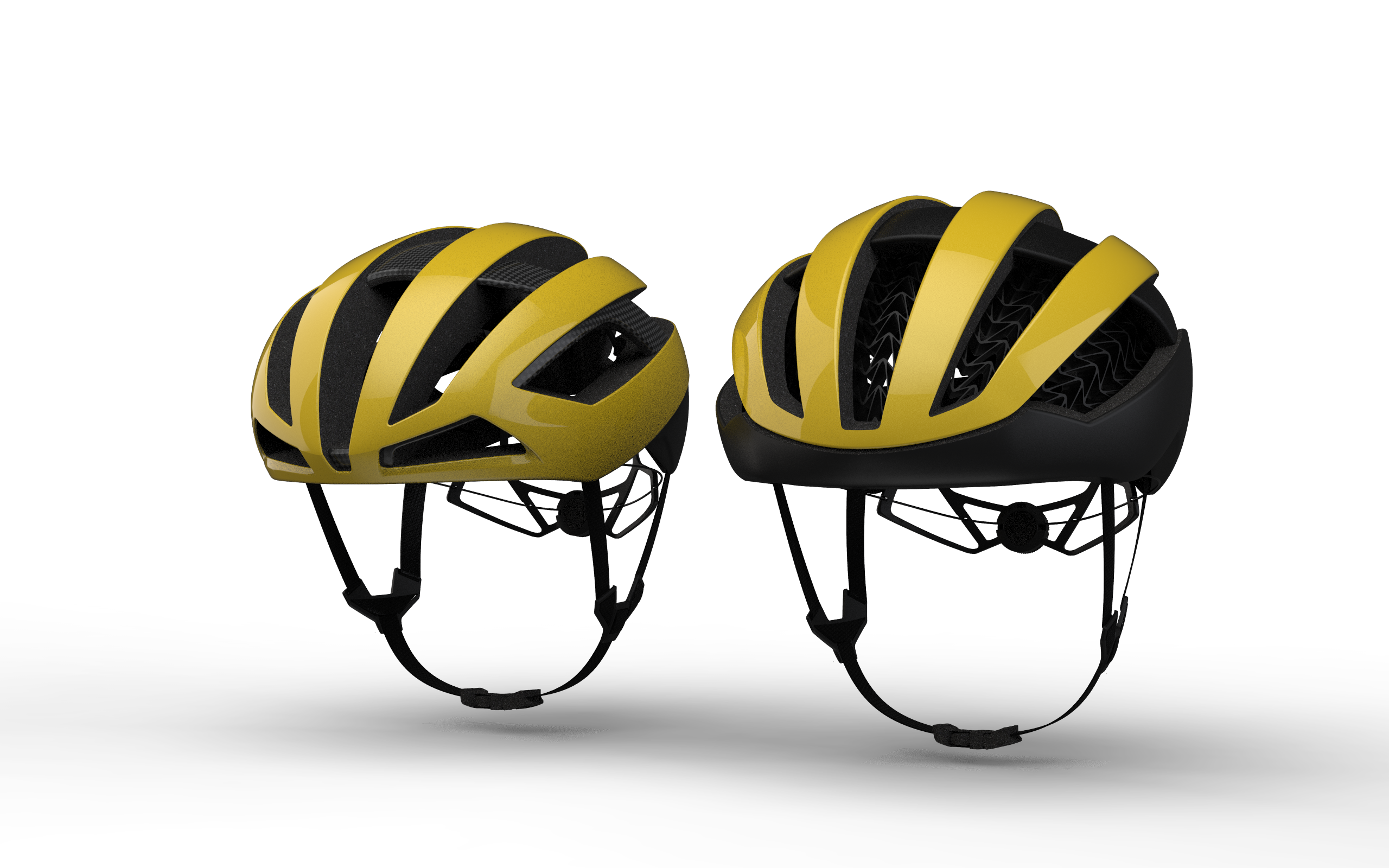
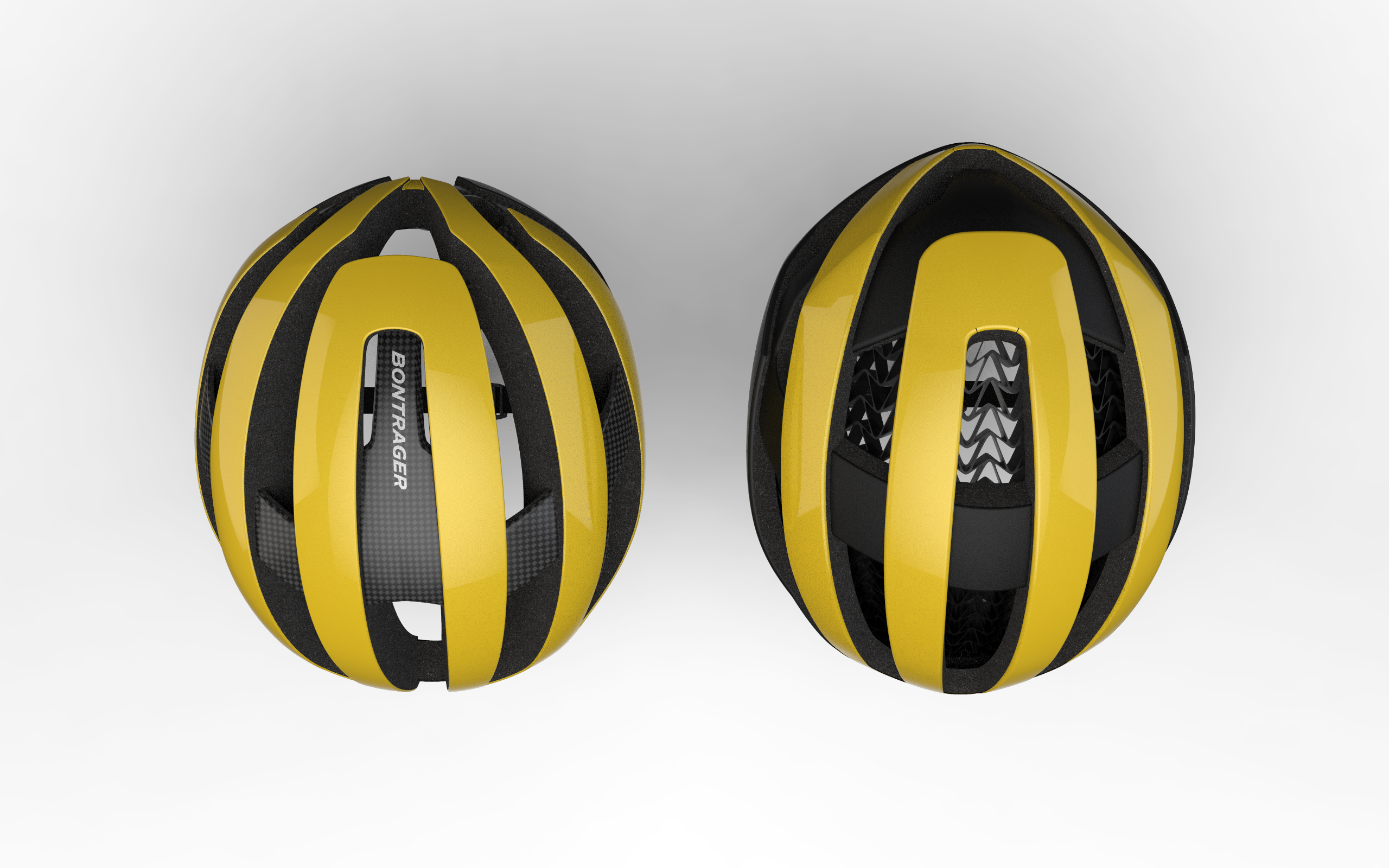
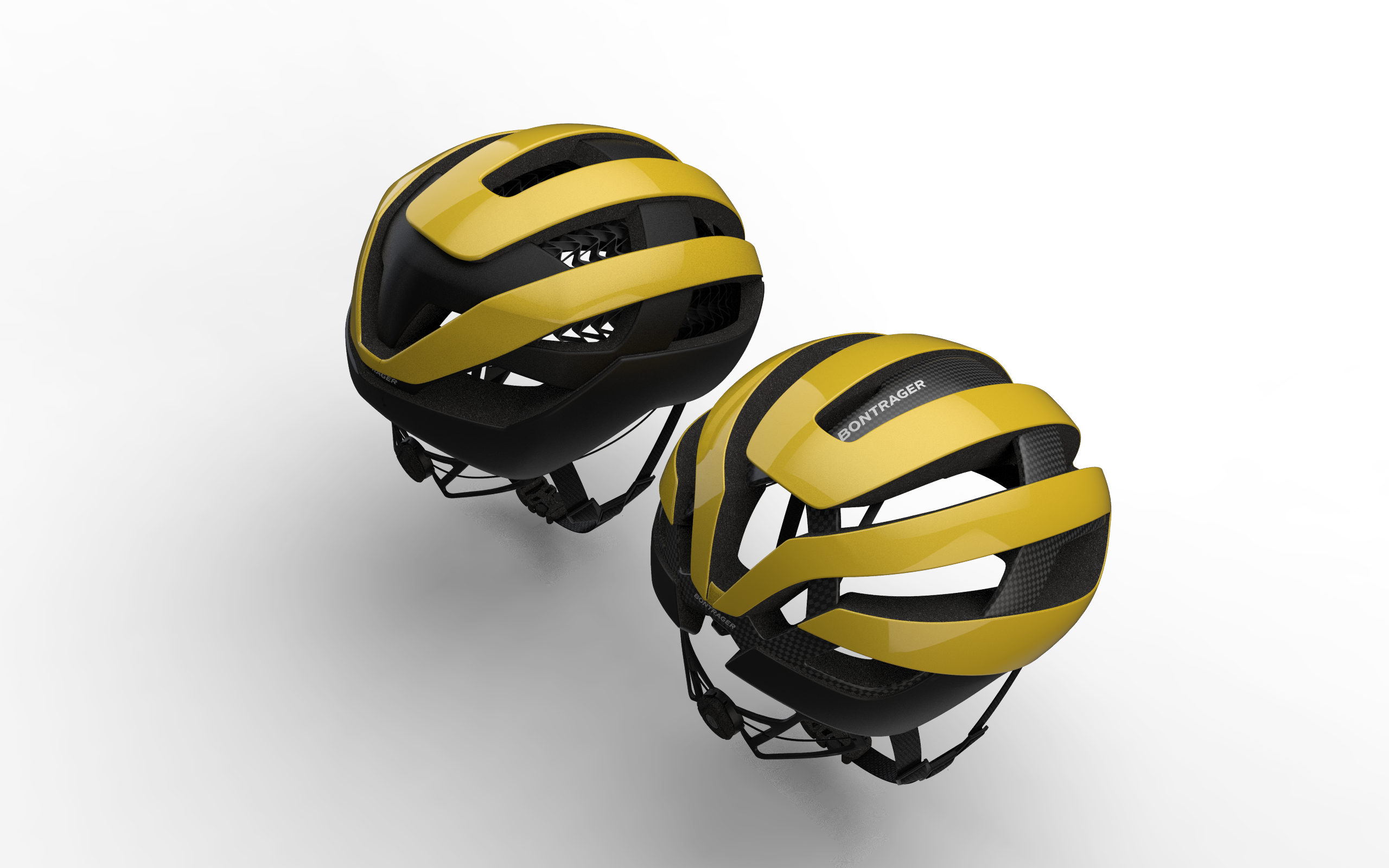
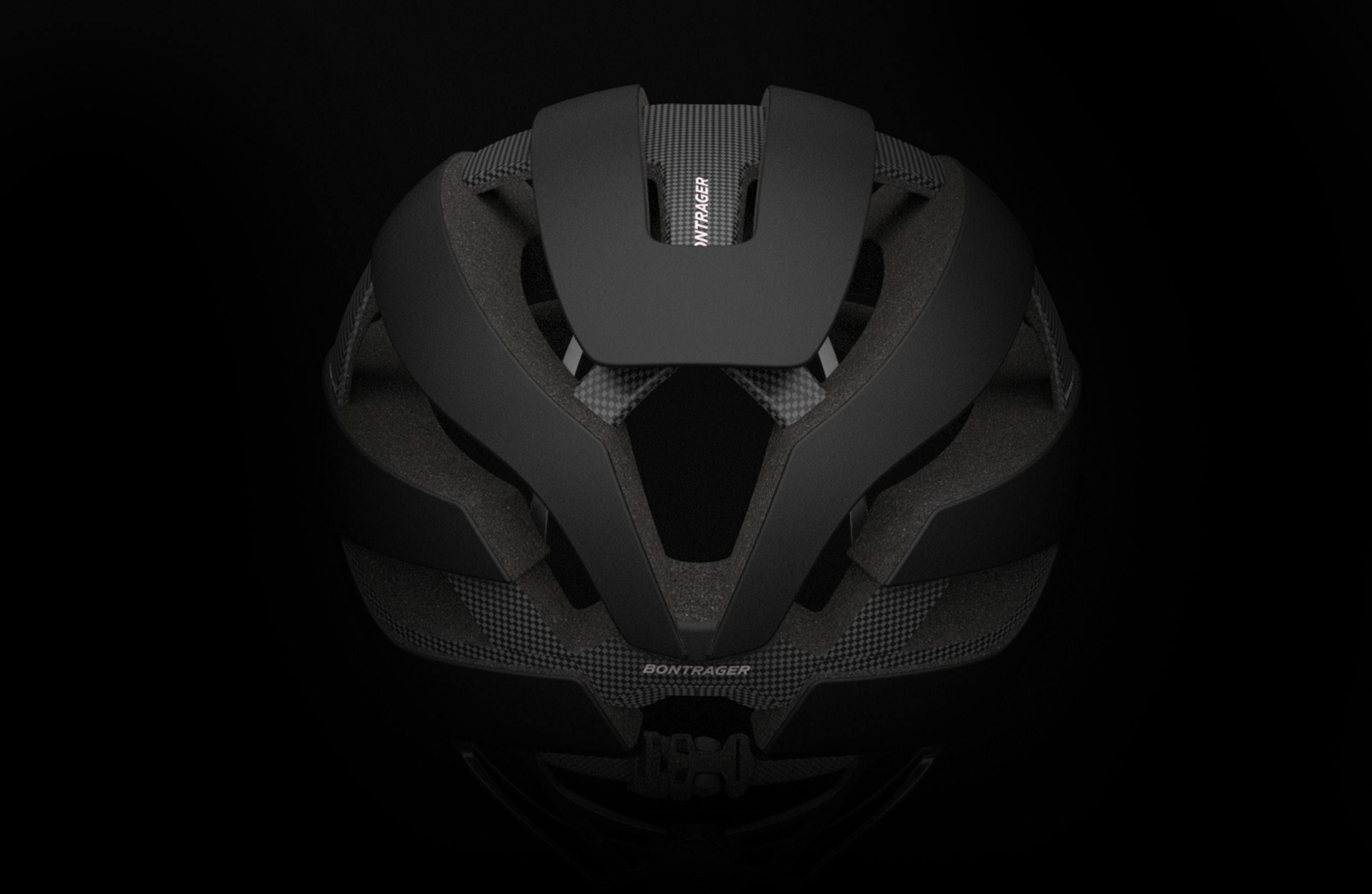
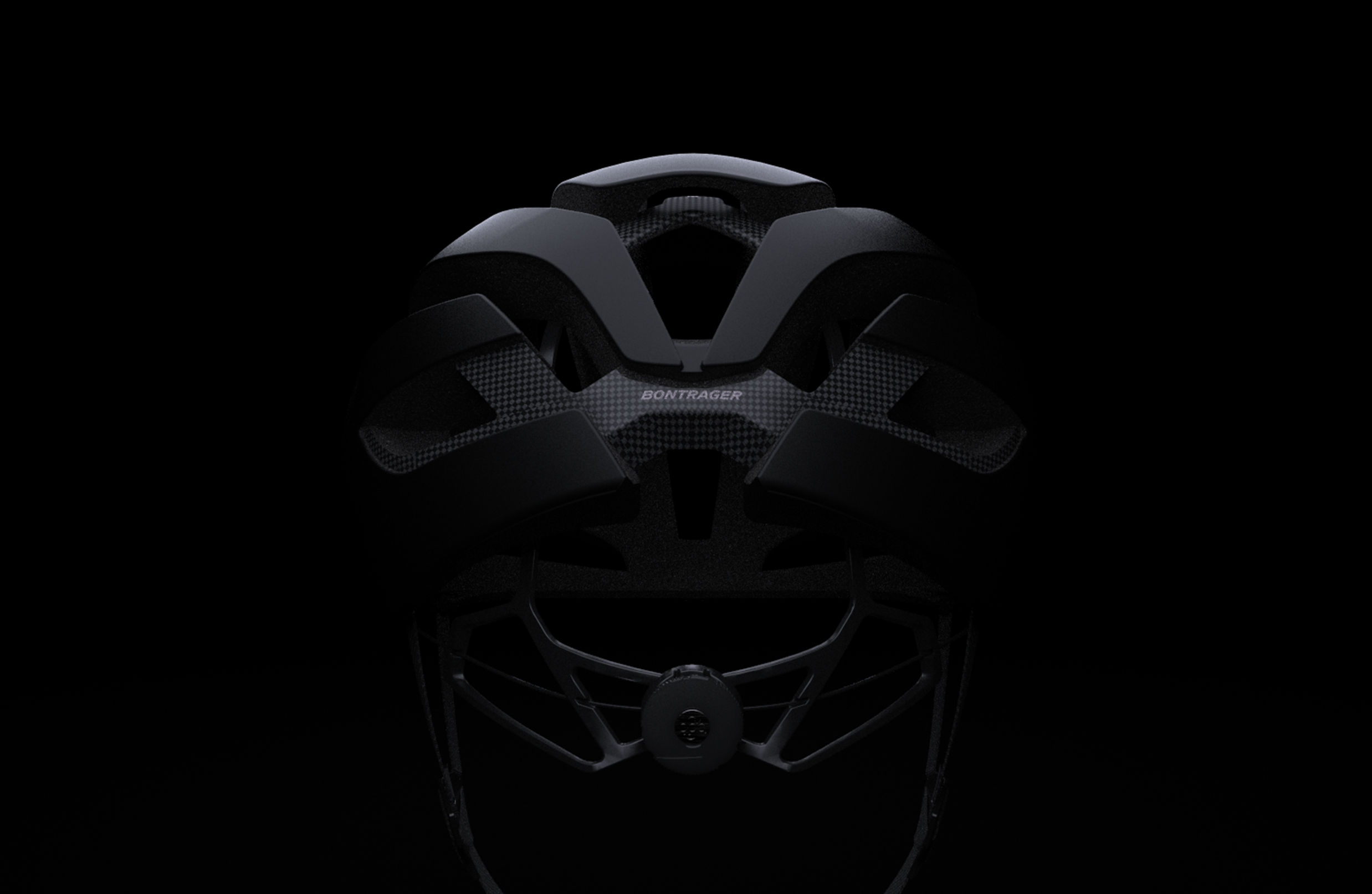
After developing a set of sketches and surfaces that could be moved forward - we worked on developing form in CAD. Using a combination of Rhino and Solidworks - we developed and printed 4 concepts that progressed and refined the design intent of the product. The following images are the final design intent that is currently going into production.
4 - CAD DEVELOPMENT
FAMILY FORM LANGUAGE
The following images are a example of form language development as a trickle down - Both the Velocis and the Circuit are apart of the new generation of Bontrager road helmets. With the Velocis at $200 price point and the Circuit at $150. Both have the same form language but appeal to two very different customers and utilize very different technologies.